













Donald Trump is pushing for the rapid expansion of artificial intelligence data centers at the same time top GOP election officals are raising red flags over the issue.
Trump’s tone deaf approach to data centers, which have sparked widespread protests in communities where they are planned, prompted the National Republican Senatorial Committee (NRSC) to issue a “secret” memo obtained by online news outlet Axios.
The memo warned top AI companies that data centers have become a major election issue and urged them to “do whatever it takes to stem the public backlash.”
The administration has tried to soften its aggressive federal permitting, by seeking voluntary pledges from tech companies to mitigate their impact on local water and electricity.
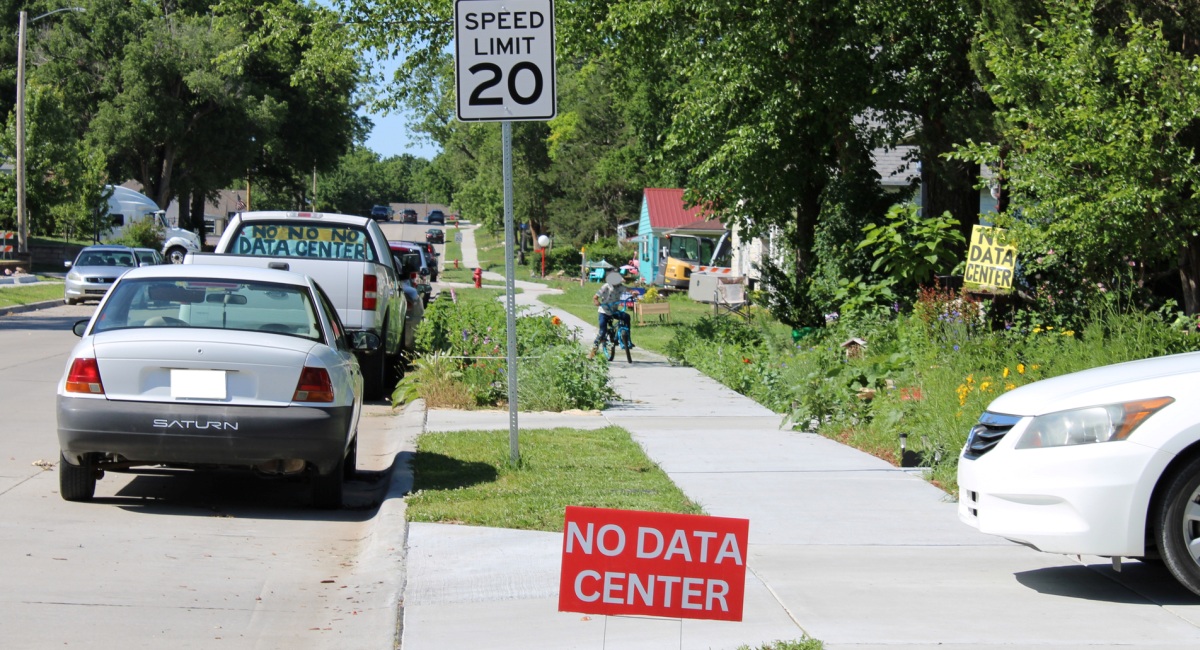
Public protests have focused concerns over soaring electricity costs, grid instability and massive water consumption needed to cool computers and other hardware.
Guardrails Alliance, a group representing union members, citizens, AI safety researchers, and “progressives who’ve been fighting corporate power and civil rights for decades” says decisions about AI data centers are being concentrated in the hands of a few “tech oligarchs.”
Activist networks have organized in more than 50 U.S. cities, resulting in protests over rising utility bills and environmental impacts.
“The Republican Party is panicking because they sold out to the AI industry – a while ago – and they know it,” said Guardrails Alliance Political Director Charlie Blaettler in a statement.
“But now they are realizing how wildly unpopular Big AI’s agenda is with the American people. Now the GOP and AI’s unaccountable billionaires are scrambling to backtrack and find a new way to pull the wool over the eyes of the public,” he added.
“It is time for the Democratic party to make it clear who they stand with: A handful of Big Tech billionaires or the majority of people in the country who want commonsense regulation for this unprecedented technology.”
In the memo, obtained by Axios, the NRSC says Democrats are using data centers as a “centerpiece” issue to defeat Sen. Jon Husted (R-Ohio) — “and that it’s working.”
Husted is particularly vulnerable because Ohio is heavily blue collar and several big data center projects in the works there. Nvidia and OpenAI have announced a project in the last few days. Meta, Vantage and QTS also have projects in Ohio, as well, according to Axios.
“If he loses and data centers get the blame, politicians across the country will take notice — and they will not go near the next one,” the memo states. “This has become a sleeper issue for the entire election cycle.”
Tech giants are scrambling to pull together media campaigns to try to shift opinion before it hardens locally and nationally, according to the website.
Leading the Future, a super PAC representing tech interests, has raised more than $100 million to spend on the midterm elections to get what they want: “A Congress that will do their bidding and an AI future that benefits them, not the many,” the Alliance asserts.
State and local governments, particularly in blue states, are responding to citizen concerns.
New York Gov. Kathy Hochul signed an executive order imposing a one-year construction moratorium on data centers requiring 50 megawatts (MW) or more of power.
The pause is designed to allow the state’s Department of Environmental Conservation to study the facilities’ environmental impact.
Pennsylvania Gov. Josh Shapiro banned data centers from the state’s “Fast Track” permit program. He also signed an executive order requiring developers to secure explicit local community approval and meet strict environmental safeguards before building.
In Maine, the state legislature passed a broad moratorium on facilities over 20 MW, although the governor ultimately vetoed it.
A dozen other states, including Delaware, Georgia, Michigan, and Virginia are considering bills proposing multi-year permitting freezes or strict infrastructure guidelines.
For the moment, the Trump administration is pushing back hard against the states, using regulatory rollbacks and public lands to bypass or weaken state and local restrictions.
It has begun unilaterally approving massive data center projects on federal lands, effectively blocking local input and bypassing state environmental regulations.
In June, federal energy regulators backed a Trump administration plan allowing tech developers to connect directly to the electrical grid, bypassing state utility boards and regional grid operators, despite the impact on consumer electric bills.
The administration has also ordered the Environmental Protection Agency (EPA) to make sweeping changes to the federal Clean Air Act so developers can build data centers and dedicated power plants without regard for air pollution permits
This undercuts state-level environmental review timelines and allows developers to establish facts on the ground before state regulators can object.
Local grassroots organizations, environmental advocates, and tech conglomerates have filed at least 15 major lawsuits in 12 states targeting the rapid buildout of AI infrastructure, according to NBC News.
At issue are severe noise pollution, illegal on-site power plants, and disputes over rising utility costs.

Keith Girard has four decades of experience as an award-winning reporter, editor-in-chief, and senior media executive. Keith’s career began in Washington, D.C., where he was a reporter for The Washington Post and a contributing editor for Regardie’s and Washingtonian magazines. He also worked as a writer/producer in CNN’s Washington Bureau and has written non-fiction books on the U.S. Marines in the Gulf War and Donald Trump and two novels, “The Heidelberg Conundrum” and “The Curse of Northam Bay.”