

















The Trump administration’s sharply scaled back fuel-efficiency rules for new cars and light trucks could set back efforts to cut air pollution by a decade or more, raise costs for consumers and allow China to dominate the global electric vehicle market.
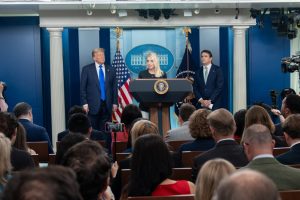
The move was announced Monday (Sept. 28) and formally overturns President Biden’s more aggressive fuel standards designed to encourage the transition to electric vehicles (EVs), which President Trump falsely labeled an “EV mandate.”
In effect, the Trump administration is tying the nation to internal combustion engine (ICE) technology that is more than a century old while the future is moving inexorably toward all-electric vehicles.
Environmental groups immediately announced that the new standards are illegal, likely setting up a court challenge.
“This rollback is not only bad policy; it also violates the law. Stay tuned,” said Natural Resources Defense Council (NRDC) lawyer Atid Kimelman in a statement.
Another environmental group, The Sierra Club, also said it planned to challenge the Trump administration’s move in court.
“Americans need relief from high costs, but instead Trump is giving automakers a free pass on pollution and handing families the bill — at the pump and with their health,” said Katherine Garcia, the director of the group’s Clean Transportation for All, in a statement.
“The Sierra Club will fight this senseless rollback every step of the way.”

The new rule, issued in December, drops the average fuel efficiency standard from 50.4 miles per gallon (MPG) by 2031 set by the Biden administration to 34.5 miles per gallon for cars and light trucks in the same model year — below what automakers on average have already achieved.
Congress established fuel economy standards five decades ago after Middle East unrest led to a U.S. oil embargo, shortages and a spike prices.
At the time, passenger car standards were only 18 mpg in 1978; they were lifted to 27.5 mpg in 1985 through 2010. Standards for light trucks (including SUVs and vans) were first set at 17.5 mpg in 1982 and remained in the low-to-mid 20s through 2010.
Higher combined fleet targets above 35 mpg did not begin phasing in until the 2011–2012 model years and later.
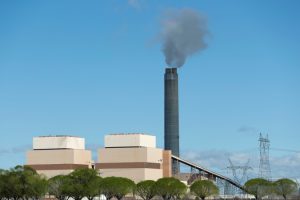
Combined with restrictions on tailpipe emmissions, higher fuel standards have had a significant impact on air pollution, according to the NRDC. an environmental group.
Corporate Average Fuel Economy (CAFE) standards, first enacted 50 years ago, have prevented billions of tons of planet-warming carbon dioxide from entering the atmosphere.
Trump’s rollback will increase air pollution by 5%, intensifing environmental degradation, leading to accelerated climate warming, reduced crop yields, heightened ecosystem toxicity and health issues for many Americans.
More than 7 billion metric tons of carbon pollution will pour into the atmosphere over the next few decades, equivalent to more than the entire annual greenhouse gas output of United States.
Health organizations note this will likely lead to higher rates of asthma flare-ups, cardiovascular stress, and respiratory illness, particularly in dense urban corridors and near major highways.
Trump has called climate change a “hoax.”
Consumers and businesses are already being punished by higher gasoline and diesel prices — up almost 40% to $4.48 a gallon, according to the AAA motor club — since Trump’s war in Iran choked off Middle East oil supplies.
The Trump fuel standards would force the average driver to pay $1,400 more in fuel costs over the lifetime of their vehicle, according to the federal National Higheway Traffic Safety Administration (NHTSA).
“This is a harsh blow to American families struggling to afford rising energy costs. It will raise drivers’ costs while also worsening air pollution across the country following a scorching summer marred by devastating storms and wildfires,” said Kimelman.
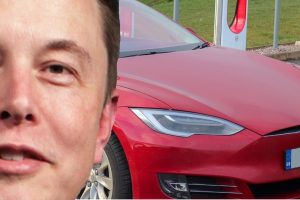
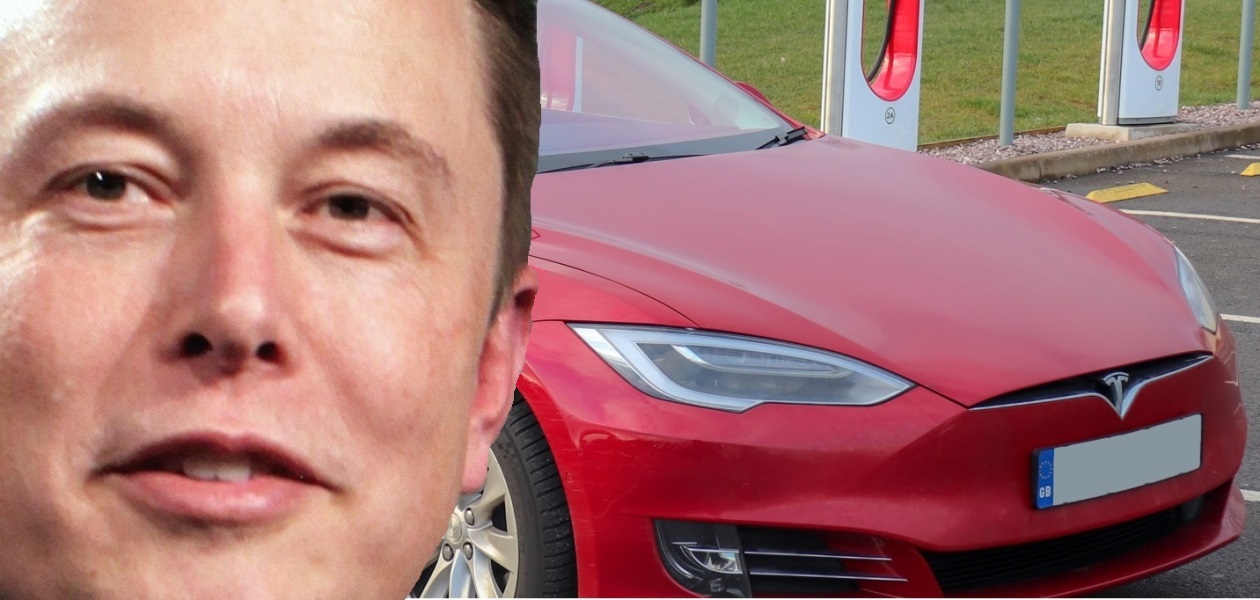
Elon Musk and his EV company, Tesla, are among the biggest losers.
Combined with the Environmental Protection Agency’s end to federal limits on planet-warming pollution from cars in February and Congress’s repeal of the $7,500 tax credit for EV purchases in the United States, EV sales have plummeted this year.
U.S. electric vehicle sales dropped nearly 24% in the first half of 2026 compared to the same period in 2025, following the elimination of the $7,500 federal tax credit.
For the first time in years, Tesla faced a notable supply surplus, producing roughly 50,000 more vehicles than it delivered in in January through March, alone. Tesla’s Model 3 and Model Y cars made up most of the surplus.
A flood of newer EVs from rival automakers has saturated the market at the same time legacy automakers are delaying or canceling competitive EV lines. At least 18 global automakers have delayed, canceled, or significantly scaled back EV production, shifting their financial capital back toward hybrids and gas-powered platforms.
That’s opening the market to domestic Tesla rivals like Rivian and Lucid, but the real winners are Chinese EV makers. Sales of Chinese cars are exploding globally, pushed by government export policy and advances in car and battery design.
While Chineses EVs are effectively banned in the United States, because of a 100% tarrif, they have established a massive stronghold in Mexico and are actively launching a major new entry point into Canada.
Canada lowered its previous surtax on Chinese cars 6.1% from 100% in step with the U.S. and set annual quota of 49,000 Chinese imports.
Meanwhile, Tesla is losing global and European market share. While Tesla’s overall delivery numbers have remained relatively stable, Chinese automakers are growing at a much faster rate, causing Tesla’s slice of the global electric vehicle pie to shrink.
In a historic shift, two Chinese brands, BYD and Chery, have officially overtaken Tesla in total vehicle registrations across Europe
Tesla’s share of the global pure-EV market has dipped below 15%, while Chinese brands collectively now command over 50% of global EV sales.
Musk initially said removing electric vehicle subsidies would hurt competitors like Ford and General Motors, but has since criticized sweeping rollbacks of consumer clean energy credits as destructive to the broader industry and “political suicide.”
Musk is expected to spend upwards of $200 million to prevent a Democratic takeover of Congress in the midterm elections.
“You could say that it would be a speed bump in the road, but if the US goes all electric in 2090 rather than 2050, say, that matters a lot for the planet,” said Joseph Shapiro, a University of California, Berkeley, economist and co-author of a study, the measured the impact of the EV tax credit.
“A lot of carbon would be emitted in that time.”
Keith Girard has four decades of experience as an award-winning reporter, editor-in-chief, and senior media executive. Keith’s career began in Washington, D.C., where he was a reporter for The Washington Post and a contributing editor for Regardie’s and Washingtonian magazines. He also worked as a writer/producer in CNN’s Washington Bureau and has written non-fiction books on the U.S. Marines in the Gulf War and Donald Trump and two novels, “The Heidelberg Conundrum” and “The Curse of Northam Bay.”