















President Trump’s order forcing states to hand over every eligible mail voter to the USPS and other red tape is facing a new legal challenge by a 24- state coalition.
Under the rule, any ballot mailed to or by a voter missing from a federal list of voters, or using an envelope USPS hasn’t approved, could be rejected and not delivered, regardless of whether that voter is fully eligible and registered under state law.
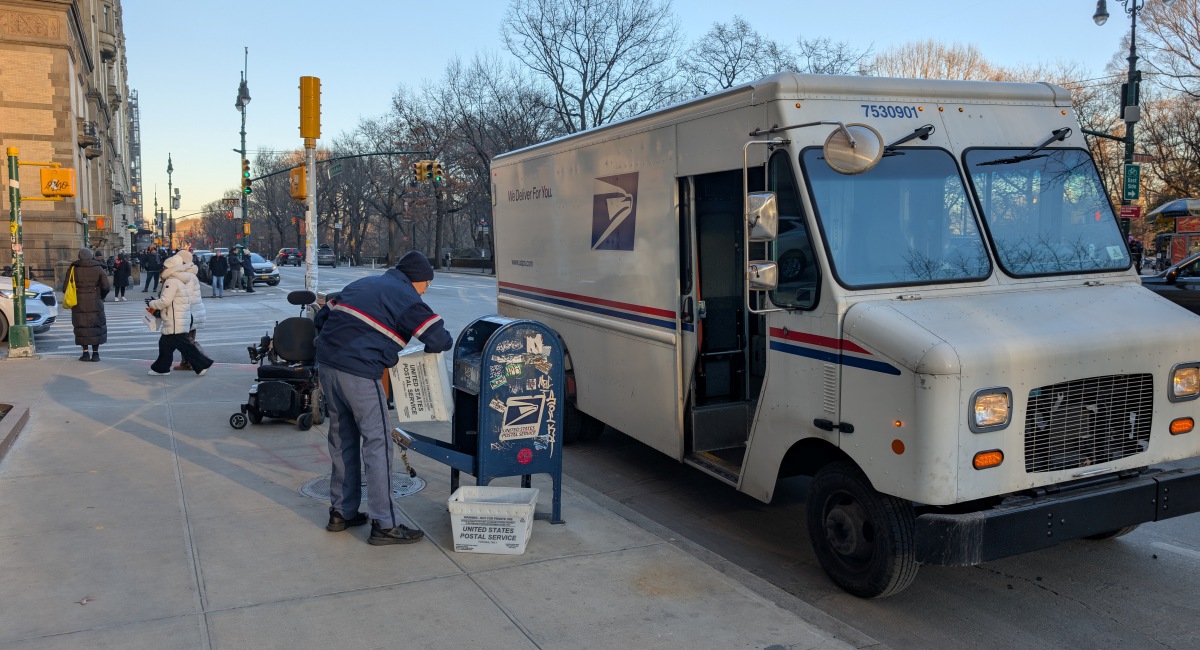
The new rule gives the postal service unprecedented control over mail voting in federal elections, just weeks before ballots go out for the November midterms.
More Reading: Donald Trump’s Darkest Election Legacy May Be Lasting Distrust of Voting Process
“Across the country, states are already deep into preparations for the 2026 elections. Now, at the last moment, the federal government is attempting to meddle in those preparations and potentially threaten countless Americans’ right to vote,” said New York Attorney General Leticia James, who is part of the coalition.
“The USPS has no authority to decide who can and cannot vote by mail. This new policy will just create confusion, unnecessary costs, and unacceptable risks for voters going into Election Day, and my office is going to court to stop it,” she said.
White voters, voters 65 years old and older, and overseas U.S. military voters are among the groups that relied significantly on voting by mail in the last presidential election, according to a States United analysis.
In all, nearly 1-in-3 Americans (31%) voted by mail in the 2024 general election, accounting for more than 48 million votes, the nonpartisan voting rights organization found.
Organizations from The League of Women Voters, AARO, US Vote Foundation, and others won an initial nationwide injunction against the restrictions.
More Reading: Special Report: Lying Trump Liars, the Lies They Publicly Told… And Walked Back Under Oath
The NAACP, Delta Sigma Theta Sorority, the ACLU, Brennan Center for Justice, Legal Defense Fund, and Asian Americans Advancing Justice are among groups supporting litigation.
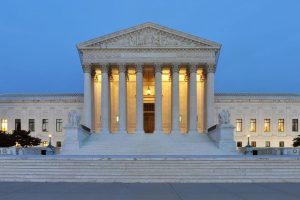
The new lawsuit was prompted by the U.S. Supreme Court’s decision Monday (Aug. 24) to block a lower court’s ruling against key portions of the president’s underlying executive order.
The court allowed the USPS to finalized the rule, giving states just weeks to comply before the midterm elections in November.
Election officials will have to redesign ballot envelopes, obtain federal approval, and establish entirely new systems to transmit voter lists to USPS, all while preparing to mail ballots to millions of Americans.
More Reading: Organized Crime History Shapes How Trump Runs Washington… Like a Mob Boss
If states or local election officials cannot comply in time, eligible voters could be prevented from receiving or returning their ballots, according to James.
Under the rule, USPS could refuse to deliver ballots associated with voters who are not on the lists or that fail to comply with the agency’s new requirements regarding envelopes.
“The rule comes at a particularly critical moment for state election officials. States and localities have already been preparing for the November 2026 general election and, in many cases, have designed and purchased ballot envelopes based on existing USPS guidance,” James said in a statement.
“The USPS processed nearly 100 million ballots during the 2024 general election, and approximately 30 percent of voters nationwide voted by mail.”
James and the coalition also warned that the rule could also disenfranchise voters through administrative errors or technical failures.
The coalition argues that the rule violates the Voting Rights Act of 1965 by directing USPS to refuse to deliver mail ballots to qualified voters who are otherwise entitled to vote under state law.
In addition, the coalition argues that requiring states to provide USPS with information identifying voters who participate in mail voting violates the Privacy Act’s restrictions on federal collection of records describing individuals’ exercise of First Amendment rights.
The rule threatens to undermine states’ constitutional authority over elections. State law determines who is eligible to vote by mail and establishes the procedures voters must follow to receive and return their ballots, the lawsuit argues.
The USPS has no authority to establish its own federal eligibility requirements to vote by mail or to refuse to transmit ballots to or from voters who are eligible to vote by mail under state law.
The coalition argues that the rule also exceeds USPS’s statutory authority because federal law requires USPS to accept, transport, and deliver lawful, properly posted mail, and does not authorize the agency to create new categories of mail that can be rejected based on its own election-related requirements.
With the midterms fast approaching, the coalition is asking the court to declare the rule unlawful, immediately block USPS from enforcing the rule while the case proceeds, and permanently strike down the rule.
Joining Attorney General James in filing the lawsuit are the attorneys general of Arizona, California, Colorado, Connecticut, Delaware, Hawaii, Illinois, Maine, Maryland, Massachusetts, Michigan, Minnesota, Nevada, New Jersey, New Mexico, North Carolina, Oregon, Rhode Island, Vermont, Virginia, Washington, Wisconsin, and the District of Columbia, as well as the Governor of Pennsylvania.
Images in this post are licensed under the Creative Commons Attribution-Share Alike 4.0 International license.

Keith Girard has four decades of experience as an award-winning reporter, editor-in-chief, and senior media executive. Keith’s career began in Washington, D.C., where he was a reporter for The Washington Post and a contributing editor for Regardie’s and Washingtonian magazines. He also worked as a writer/producer in CNN’s Washington Bureau and has written non-fiction books on the U.S. Marines in the Gulf War and Donald Trump and two novels, “The Heidelberg Conundrum” and “The Curse of Northam Bay.”