











President Trump is ready to roll back gas mileage standards that will tie the nation to century-old internal combustion technology, while China races ahead with worldwide electric car and battery domination.
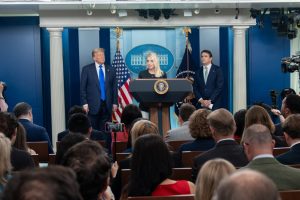
Trump posted on his social media site today (Sept. 26) that he had signed off on new auto fuel economy standards that would roll back anti- pollution efforts by at least a decade or more.
The new standard — an average 35 miles a gallon across all vehicles — will increase carbon dioxide emissions by about 5% and add roughly 100 billion gallons of fuel consumption through 2050, according to the federal Department of Transportation.
Environmental groups have already announced plans to sue in court to block the move.
“Americans need relief from high costs, but instead Trump is giving automakers a free pass on pollution and handing families the bill — at the pump and with their health,” said Katherine Garcia, the director of the group’s Clean Transportation for All campaign, in a statement.
“The Sierra Club will fight this senseless rollback every step of the way.”
A 5% increase in air pollution would “intensify environmental degradation, leading to accelerated climate warming, reduced crop yields, and heightened ecosystem toxicity,” according to the University Corporation for Atmospheric Research, (UCAR) a consortium of colleges and universities.
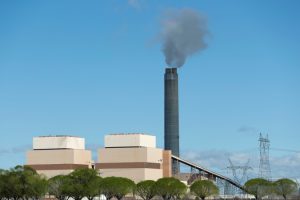
Sulfur dioxide (SO₂) and nitrogen oxides (NOx) — byproducts of diesel and automobile combustion — contribute to acid rain and soil depletion. The transportation sector accounts for roughly 45% of total NOx emissions.
The proposed rule, issued in December, applies to cars and light trucks by the 2031 model year, reversing a Biden era standard of 50.4 miles per gallon.
The move comes on top of the Environmental Protection Agency’s end in February to all federal limits on planet-warming pollution from cars. As such, the federal government no longer considers carbon dioxide (CO₂) and other greenhouse gases from vehicles as threats to human health.
Trump calls climate change a “hoax.”
But the changes will add more than 7 billion metric tons of carbon pollution to the atmosphere over the next few decades, in excess of the annual greenhouse gas output of the entire United States, according to environmental groups.
Health organizations assert that increased air pollution will likely lead to higher rates of asthma, cardiovascular stress, and respiratory illness, particularly in dense urban corridors and near major highways.
The strict Biden administration fuel standard was set to encourage production of electric cars and trucks. It was combined with massive federal subsidies and tax credits to aid consumer purchases.
Domestic electric vehicle sales dropped nearly 24% in the first half of 2026 compared to the same period in 2025, following the elimination of the $7,500 federal tax credit in September a year ago.
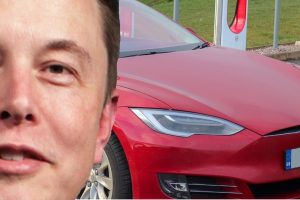
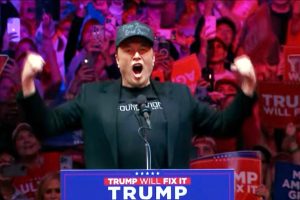
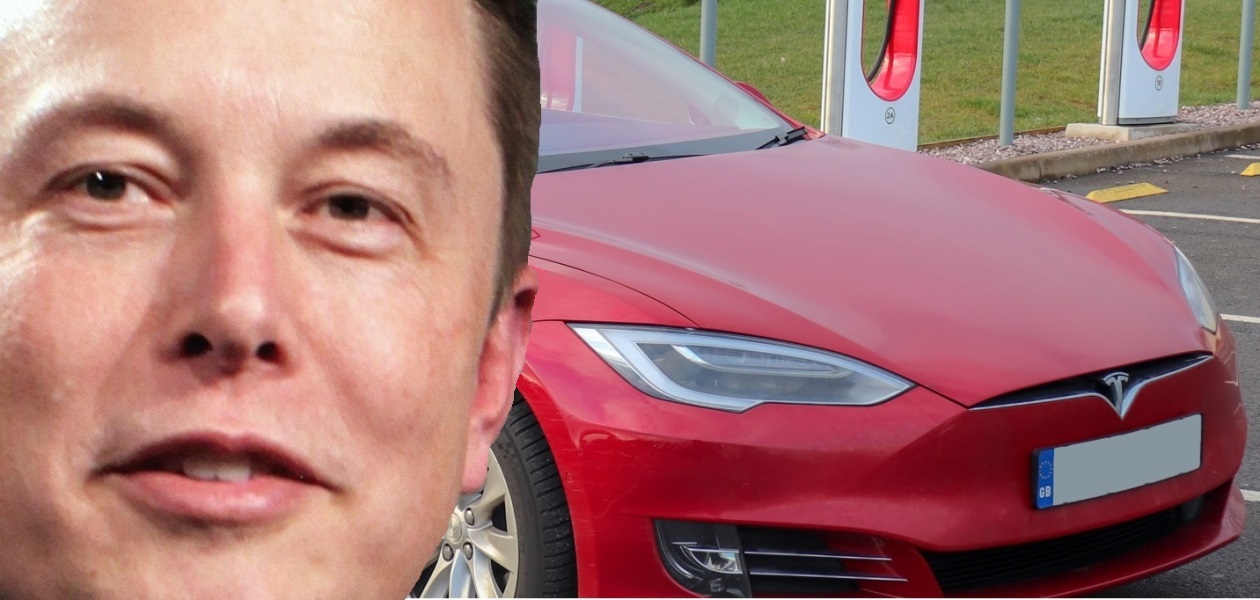
Tesla CEO Elon Musk is one of Trump’s most advid backers, even though the administration has hammered Tesla sales. They’re down 16% year-over-year through August.
For the first time in years, Tesla faced a notable supply surplus. It built an estimated 50,000 more vehicles than it delivered in the first three months of this year, alone.
Model 3 and Model Y cars made up most of the surplus and has led to aggressive markdowns on new cars, which, in turn, has knocked the wind out of the used car market for the electric vehicles.
A flood of newer EVs from rival automakers has saturated the market, but other EV makers have been hurt even more, and Tesla has actually made small gains in market share. Two U.S. EV makers, Rivian and Lucid are seeing higher sales overseas, but loss of the credit has made it more difficult to reach profitabity.
Legacy automakers like Ford and General Motors and foreign brands like Mercedes and BMW are delaying or canceling competitive EV cars. In all, at least 18 global automakers have delayed, canceled, or significantly scaled back EV production plans in favor of hybrids and gas-powered cars, according to the Institute for Energy Research.
China is the biggest benefactor from Trump’s relaxed fuel standards and assault on EV cars and is moving sharply ahead in the production of EVs and batteries.
In North America, Chinese EV makers are beginning to dominate the Mexican market (70% of all EV sales) and are expanding their foothold in Canada, which Trump his alienated with a spurious trade war. Chinese EVs are effectively banned in the United States through a 100% import tariff.
In Canada, thanks to Trump’s haphazard trade wars, the government has dropped its previous 100% surtax on Chinese EVs to 6.1% and upped the nation’s annual quota to 49,000 Chinese electric vehicles.
E.V. sales are growing rapidly in the rest of the world, as well, over spiking fuel prices caused by Trump’s illegal war in Iran. Most of that growth is being absorbed by government subidized Chinese EV makers.
Tesla is losing global and European market share to Chinese EV makers. While Tesla’s overall delivery numbers have remained relatively stable worldwide, Chinese automakers are growing at a much faster rate.
In a historic shift, Chinese EV makers, BYD and Chery, have officially overtaken Tesla in total vehicle registrations across Europe. Tesla’s share of the global pure-EV market has dipped below 15%, while Chinese brands collectively now command over 50% of global EV sales.
Keith Girard has four decades of experience as an award-winning reporter, editor-in-chief, and senior media executive. Keith’s career began in Washington, D.C., where he was a reporter for The Washington Post and a contributing editor for Regardie’s and Washingtonian magazines. He also worked as a writer/producer in CNN’s Washington Bureau and has written non-fiction books on the U.S. Marines in the Gulf War and Donald Trump and two novels, “The Heidelberg Conundrum” and “The Curse of Northam Bay.”