
























Donald Trump’s plan to kill the Affordable Care Act (ACA), also known as Obamacare, is a cruel ruse that will benefit health insurers at the expense of millions of consumers.
On its face, Trump is playing to the popular appeal of “consumer choice,” giving money directly to consumers to buy plans “suited to their needs.”
But it’s a cruel hoax.
Repealing the ACA would eliminate a host of consumer protections and revive health insurance rip offs, sham policies and discrimination. Millions will lose coverage and medical bankruptcies will skyrocket.
On Capitol Hill, Sen. Rick Scott (R-Fla) has been a wolf in sheep’s clothing, bleating about the benefits of “consumer choice” when he’s really fronting for health insurers.
More Reading: Trump Assault on Planned Parenthood, Gender Health Care Faces New Legal Challenge
In 2003, his Florida health care company, HCA Inc. (formerly known as Columbia/HCA and HCA – The Healthcare Company) paid $1.7 billion in civil penalties and damages arising from false claims submitted for Medicare and other federal health program reimbursements.
The case was the most comprehensive health care fraud investigation ever undertaken by the Justice Department. Scott who was CEO at the time, dodged personal responsibility by invoking his Fifth Amendment right against self-incrimination 75 times.
Scott is no consumer champion. He’s accepted more than $618,000 in political contributions from the insurance industry over his political career and has argued for steep cuts in Medicaid.
As of late 2024 data, the insurance industry has donated an estimted $45.1 million to Trump and Republicans in the 2024 election cycle, which includes contributions from individuals, PACs, and soft money.
They are bought and paid for.
President Obama signed the ACA signed into law in March 2010 after it was enacted by Congress without any Republican votes in the House or Senate.
More Reading: Do Masks Really Work? Definitive New Study Has Answer; Refutes Right-Wing Claims
And, they haven’t stopped there. Republicans have attempted to repeal the ACA over 70 times since 2010, without presenting an alternative.
While every attempt has failed, Republicans have successfully sabotaged some of the law’s consumer protections and cost controls.
During debate on the measure, Republicans in Congress, at the behest of insurers, were able to kill a key cost-control measure, the creation of a public health insurance option during debate on the measure.
The Trump administration’s sabotage includes cutting enrollment outreach, ending cost-sharing subsidies, expanding short-term plans, imposing Medicaid work requirements, and legal challenges that eliminated fees for healthy people who try to game the system by only enrolling after they get sick.
More Reading: Trump Faces Legal Onslaught by Costco, Other Retailers, Demanding Tariff Refunds
In fact, what health insurance companies want is to be free of ACA restrictions all together. Here is a list of consumer protections that would be lost if the ACA is repealed.
Pre-existing Condition Protections: Insurance companies could once again deny coverage, charge higher premiums, or exclude benefits for individuals with pre-existing conditions like diabetes, cancer, or high blood pressure.
Annual and Lifetime Limits: Insurers could reinstate dollar limits on the essential health benefits they will pay for over a year or a lifetime, potentially leaving patients with significant, uncapped medical bills in the event of a serious illness.
Essential Health Benefits (EHBs): Plans in the individual and small group markets would no longer be required to cover a minimum set of 10 Essential Health Benefits, which include:
- Ambulatory patient services Emergency services Hospitalization
- Maternity and newborn care Mental health and substance use disorder services
- Prescription drugs
- Rehabilitative and habilitative services
- Laboratory services
- Preventive and wellness services and chronic disease management
- Pediatric services, including oral and vision care
- Free Preventive Services: The requirement for most health plans to cover preventive services (like cancer screenings, flu shots, and contraception) at no out-of-pocket cost would be lost for millions of people, including those with Medicare.
Coverage for Young Adults: The ability for young adults to stay on a parent’s health insurance plan until age 26 would likely be eliminated or reduced.
Guaranteed Issue: The requirement that health plans must accept every applicant, regardless of health status, gender, or other characteristics, would be eliminated, allowing insurers to “cherry-pick” low-cost healthy young people and deny others coverage.
Increased Out-of-Pocket Costs: Without the requirement for plans to cover Essential Health Benefits, or the limits on annual out-of-pocket costs, patients could face significantly higher deductibles and co-pays.
Rate Review and Accountability: The provisions that require insurers to publicly justify significant premium rate increases and mandate that they spend a minimum percentage of premiums on medical care (Medical Loss Ratio, or the 80/20 Rule) could be weakened
Medicaid Expansion: The expansion of Medicaid to cover more low-income adults, which was enabled by the ACA, would be eliminated, potentially causing millions to lose coverage.
The overall effect of a repeal would likely be a significant increase in the number of uninsured Americans and a return to pre-ACA insurance market practices that allowed for greater discrimination against those with medical needs.
Medical expenses are a primary cause of personal bankruptcy in the United States. Some studies have found that over 60% of personal bankruptcies are tied to medical issues. An estimated 100 million Americans currently owe a collective $220 billion in medical debt.
Black Americans, women, and those with lower incomes are usually burdened the most by medical debt.
No other industrialized country in the world has a similar problem with medical bankruptcies because all of them provide universal health insurance.
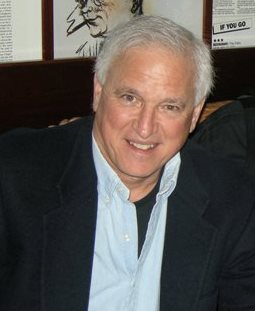
Keith Girard has four decades of experience as an award-winning reporter, editor-in-chief, and senior media executive. Keith’s career began in Washington, D.C., where he was a reporter for The Washington Post and a contributing editor for Regardie’s and Washingtonian magazines. He also worked as a writer/producer in CNN’s Washington Bureau and has written non-fiction books on the U.S. Marines in the Gulf War and Donald Trump and two novels, “The Heidelberg Conundrum” and “The Curse of Northam Bay.”