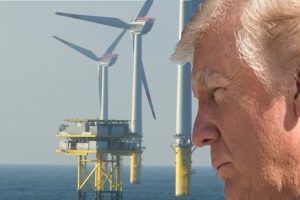






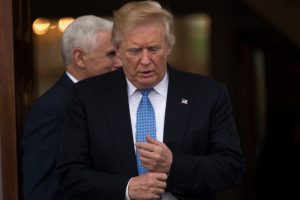




The Trump administration has engaged in two allegedly illegal deals to pander to the president’s fetishized aversion to offshore windmills, costing taxpayers $1.4 billion and straining the electrical grid, two new lawsuits charge.
New York Attorney General Letitia James is part of an eight-member state attorneys general coalition that is charging Trump is unlawfully misuse taxpayer dollars and sabotage states’ ability to meet growing energy demands.
The lawsuits ask the court to stop the deals, which kill critical wind projects just to bankroll fossil fuel plants elsewhere in the country.
They are asking the courts to declare the agreements unlawful, void the lease cancellations, and block the administration from taking any further action to carry out the deals.
The administration has offered $1.4 billion in taxpayer funds to two energy companies, Bluepoint Wind, and Invenergy, to cancel four offshore wind projects.
“Americans are facing increasing energy costs because this administration would rather pay off energy companies than let us build the new power sources we need,” said James, in a statement.
“These illegal backroom deals take money that should have gone toward lowering New Yorkers’ bills and hand it to fossil fuel projects in other states, all while our energy demand continues to grow.”
New York Governor Kathy Hochul called “pay-to-not-play scheme… an outrageous abuse of taxpayer dollars that hurts our ability to meet our energy needs, reduce emissions, create good paying jobs, and help secure American energy independence.”
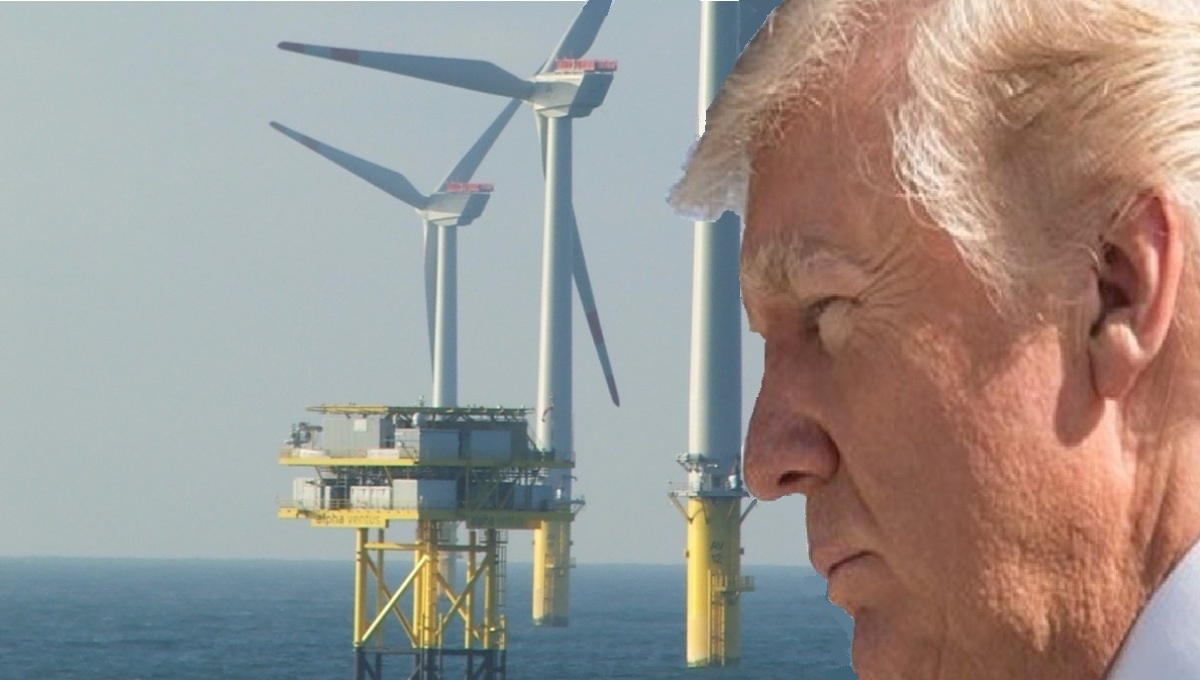
Some critics have linked Trump’s animosity to windmills to an Irish project to add offshore turbines with sight of one of Trump’s golf courses. He’s vowed to “not to let any windmill be built” and has pushed gas and coal-fired plants instead.
Trump’s previous efforts to block windmill projects by executive order were shot down in court, causing the administration to shift to cash payouts.
One of the lawsuits is challenging the U.S. Department of the Interior’s (DOI) deal with Bluepoint Wind, to cancel a lease off the coast of New York.
The project is designed to generate 2.4 gigawatts (GW) of clean electricity, enough to power an estimated 1 million homes across New York and New Jersey. It would also eliminate 6.6 million metric tons of carbon dioxide emissions.
As part of the deal Bluepoint also agreed not to pursue any future ofshore wind developments in the entire United States.
In exchange, Trump offered $765 million from a federal fund that is only supposed to be used to settle legitimate legal settlements.
The agreements do not resolve any actual or imminent litigation, meaning the administration has no legal basis to pay these companies hundreds of millions of dollars from the fund, the lawsuit asserts.
DOI’s deal with Invenergy involved canceling three offshore wind leases, including one off the coast of New York. It paid the company $653 million from the same fund.
The New York project, known as “Leading Light Wind” would have generated 2.4 gigawatts (GW) of electricity.
Combined with its other regional leases, Invenergy’s total planned offshore wind portfolio was expected to produce around 5 GW of electricity, enough to power an estimated 2 million homes across New York, New Jersey, Maine, and Massachusetts.
Invenergy will use the money to Instead to build natural gas plants in Indiana, Wisconsin, Iowa, Kansas, and Missouri and geothermal projects in the western United States, none of which will deliver a single watt of power to New York.
The two canceled New York projects alone were expected to bring more than $16 billion in investments to New York and create more than 2,800 new jobs in the state.
The canceled projects would have connected directly to New York City’s electric grid, providing a new source of electricity at a time when the state anticipates significant growth in demand.
Combined with the other two Invenergy leases, the canceled projects were expected to generate over eight gigawatts of electricity, enough to power more than four million homes, James noted in a release.
Electricity demand in New York will grow eight percent by 2030 and 24 percent by 2040, driven in part by economic development and new large loads such as data centers.
At the same time, aging fossil fuel generators are approaching retirement, making new sources of power essential to meeting growing demand and maintaining grid reliability.
If the administration deprives the Northeast of new energy generation while demand continues to outpace supply, electricity scarcity and grid congestion will worsen, which could increase energy costs for consumers.
The lawsuits assert that the administration is unlawfully using taxpayer dollars to advance the president’s policy preference for oil and gas development.
Joining Attorney General James in filing both lawsuits are the attorneys general of Connecticut, Delaware, Maine, Massachusetts, New Jersey, Rhode Island, and Vermont. California is filing a separate, concurrent lawsuit challenging a deal between Invenergy and the administration to cancel a lease off its coast.
Keith Girard has four decades of experience as an award-winning reporter, editor-in-chief, and senior media executive. Keith’s career began in Washington, D.C., where he was a reporter for The Washington Post and a contributing editor for Regardie’s and Washingtonian magazines. He also worked as a writer/producer in CNN’s Washington Bureau and has written non-fiction books on the U.S. Marines in the Gulf War and Donald Trump and two novels, “The Heidelberg Conundrum” and “The Curse of Northam Bay.”