









Many millionaires in the United States today are rich because the stock market has been a great place to invest; others have their money tied up in small and mid size businesses that have been successful.
For now, those in the stock market are doing well. The S&P 500 is up 12.7% year-to-date, the Dow is up 7.5% and the NASDAQ is up 14.15%. Some predict a strong stock market through 2027. We shall see; predictions are just that.
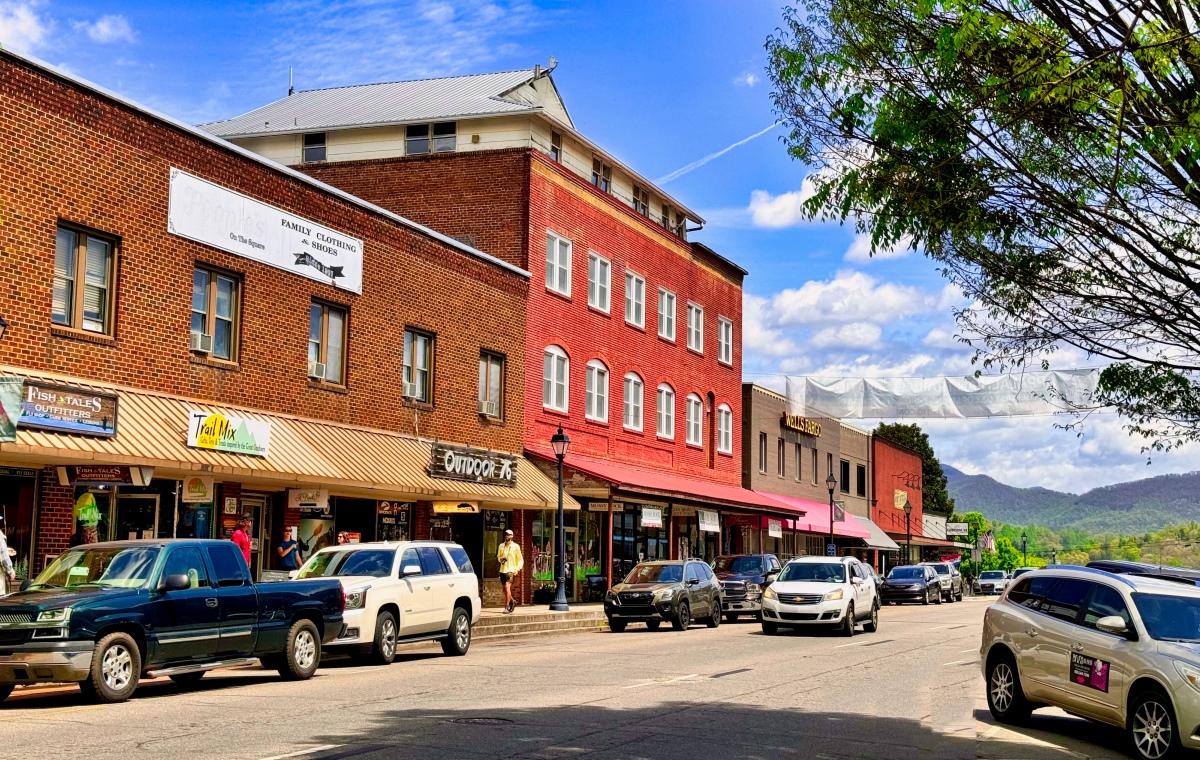
But those whose fortunes are tied up in their small and midsize businesses, even large businesses, are suffering and will suffer more. And the companies that service these businesses will see cutbacks.
More Reading: Trump Tariff Flipflops Roil Main Street as Small Business Sales Drop, Confidence Dwindles
Many public company valuations are high , higher than they’ve ever been which is troubling to some, but others claim that solid revenues and resilient consumer spending will support these valuations.
That is, until consumers stop spending.
Too many recent reports say smaller businesses are suffering, and that some are in danger of collapse, more than at any time since the pandemic.
Three circumstances are joining to create a storm for American businesses, and for some, it will be a perfect storm if the circumstances continue. There are no signs they are about to stop or slow down.
More Reading: Amazon Accused of Cheating 1.2 Million Mostly Small Business Advertisers in New Lawsuit
First, there are the ridiculous early 20th century-style tariffs imposed on goods and raw material entering United States, serving to drive up the cost of goods sold.
Some sellers and manufacturers have passed on some of the cost to their customers, and others have absorbed these costs cutting into their profit margins.
Second, unless the product is made next-door to a seller it needs to be transported from point of manufacture or entry to the seller or the customer. At some point, these goods will travel by diesel-powered trucks or trains.
More Reading: Consumers at Risk After Trump Orders Beef Imports Amid Massive Inspection Cuts; Ranchers Devastated
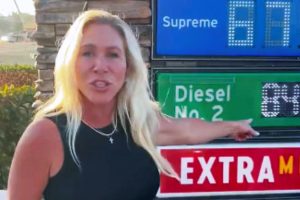
Unless you drive a diesel, you probably have not noticed that diesel fuel is now three dollars per gallon more expensive than it was at the start of this year. This represents a doubling of cost to the user.
These transportation costs are being passed on the sellers who can either absorb them or try to pass them onto their customers.
Third, interest rates have increased by 25 basis points and they are expected to increase again in December by the same amount.
The goal of these increases by the Fed is to reduce inflation caused by the Iran war and tariffs. Thus, all three circumstances are linked together into executive policy blunders.
More Reading: Workers Under Siege in Trump Economy, Layoffs Mount, Corporations Pocket Trump Tax Breaks
Higher interest rates simply make conducting business more expensive. Yes, there are some cash rich companies that finance their own operations, but many of the smaller companies rely on revolving lines of credit and fixed loans and the interest they pay on these loans will cut into their margins.
Higher interest rate rates will also stymie growth because it becomes too expensive to finance.
Some businesses are even hoarding inventory, releasing it slowly out of fear that their inventory items will not be obtainable for long. Their gross revenues and profits will diminish.
It will be harder for customers to get certain goods. Reduced sales means reduced gross revenue while fixed costs remain the same and profits decrease.
Where they are able, manufacturers and other sellers are raising prices to absorb these increased costs. When this happens, the result is inflation and the Fed will continue to target inflation with higher interest rates, adding more to the cost of manufacturing and selling goods.
It sounds like an unending circle.
These businesses will really feel the pain when and if the yield on 10-year US treasury bonds hits 6%; it’s now at 5% and it’s trajectory is upward, according to JP Morgan.
Some industries are safer than others because they are able to pass their increased costs to their customers.
For example, the airline industry is one of these, but this practice has a bad effect on inflation, although in the short-term it is a practice that may keep the airline industry solvent. As of August, fares were up 23% year-to-date. That is not sustainable.
The Fed had to raise rates and probably has to do it again to try to tame inflation.
But doing so will not slay the inflation monster— the creator of this inflation—-which are Trump‘s Iran war and his inexplicable tariff policies. If he had set out intentionally to damage the economy, he probably could not have done a better job.
Trump can do something about his tariff policy. The announcement that he is dropping tariffs would drive the markets upward and reduce costs to make and sell goods. He will never do so because he cannot possibly admit he was wrong about anything.
The war? He’s stuck.
There’s not a darn thing he can do other than to walk away with his scaly tail between his legs. Even if he does, it will be quite likely we will never see fuel prices at the same level they existed at the start of this year.
And, that will continue to make everything more expensive and to some extent cause consumers to choose between filling a vehicle and buying discretionary goods will which will affect consumer spending and potentially stock valuations.
The problem is circular.

Jim Astrachan is lawyer who represents clients in intellectual property law and litigation, mediation, and business, regulatory, and transactional matters. He’s a Life Fellow of the Baltimore City Bar Foundation, the Maryland Bar Foundation, and the American Bar Foundation.