














When the 120th Congress is sworn in at noon on January 3rd, the Democratic majority will wield their subpoena powers like a terrible swift sword to investigate some of the many alleged Trump administration dirty dealings.
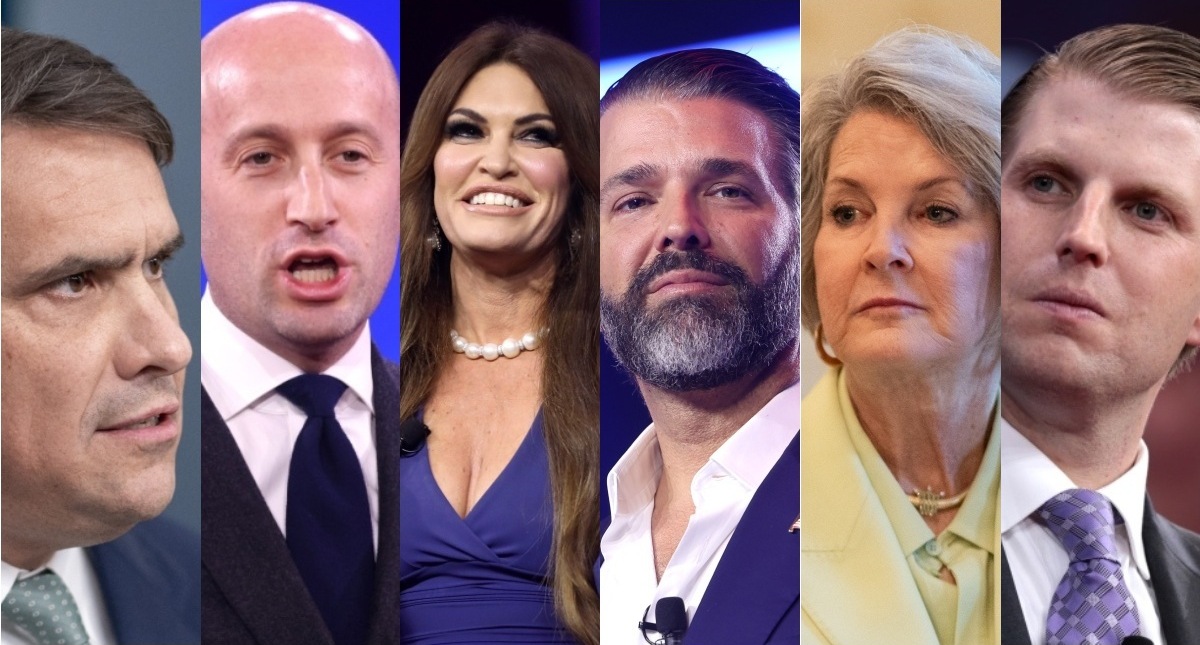
And so in anticipation, on November 18th, Rep. Robert Garcia, Ranking Member of the House Committee on Oversight and Government Reform and its next chair, issued a dozen letters instructing figures in the Trump world to preserve documents, and a two-word statement: “lawyer up.”
In an odd twist, Trump Attorney General Todd Blanche has threatened select lawmakers with potential criminal prosecution for using congressional subpoena powers to compel testimony from administration officials or corporate bigwigs.
The threat is bizarre and ludicrous on its face because Congress has constitutionally mandated authority to conduct government oversight. Lawmakers are also protected by legislative immunity (often absolute immunity for legislative acts) under the Speech or Debate Clause of the U.S. Constitution (Article I, Section 6, Clause 1).
While the preservation letters have no legal force, it’s a first step towards accountability, and lays out the House Democrats’ investigative priorities.
It’s a challenge to know who to choose when it comes to all the current administration’s malfeasance, but Democrats are going to try.
The investigations will focus on three main areas: the Epstein files coverup, financial corruption, and the Department of Homeland Security. And the words quid pro quo come up a lot.
Here’s a rundown of who is soon to be in the crosshairs, and for what:
Jared Kushner and Affinity Partners:
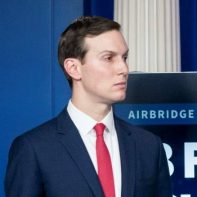
While serving as a lead negotiator and advisor in the Middle East, Iran and Russia, Kushner at the same time, allegedly attempted to solicit around $5 billion in investments for his company, Affinity Partners, according to The New York Times. That’s in addition to the $2 billion Kushner solicited from Saudi Arabia’s Public Investment Fund in 2021 to start the fund, without any previous experience running an investment fund.
Attorney General Todd Blanche:
In spite of the Epstein Files Transparency Act, to this day the AttorneyGeneral (and Trump’s former personal lawyer) has only released 3.5 million of the 6 million Epstein files in its possession, in violation of the law. Blanche is also accused of having a hand in Epstein sex trafficker Ghislaine Maxwell’s transfer to a minimum-security prison following that closed-door July 2025 “proffer” session. Maxwell reportedly insisted she had not seen Trump “in any type of massage setting. I never witnessed the president in any inappropriate setting in any way. The president was never inappropriate with anybody,” adding Trump was “a gentleman in all respects.”
Federal Bureau of Prisons Director William K. Marshall III:
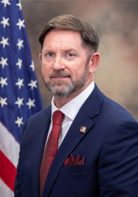
Garcia and the Oversight Committee want more information from these top prison officials about how Maxwell’s prison transfer came to pass, in spite of the fact sex offenders are barred from any minimum-security prison by the Bureau of Prisons’ own policy. The Committee would also like details on reports that Maxwell has been receiving “extraordinary preferential treatment” there, which the BOP has so far refused to respond to for over a year.
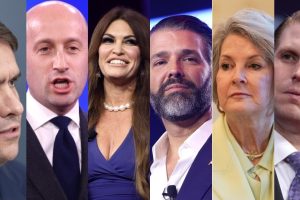
Eric Trump:
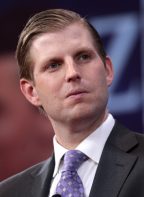
Trump is under scrutiny regarding alleged conflicts of interest, foreign investments, and business dealings tied to his father’s presidency, including crypto company World Liberty Financial and various pay-to-play schemes. The committee wants to examine a reported $500 million investment made by an Emirati-backed firm for a 49% stake in the company shortly before Trump’s inauguration. Also in the agenda are Trump’s business ventures act as vehicles for wealthy individuals or foreign entities to funnel money to the Trump family in exchange for government action. Specific concerns include whether associates received preferential treatment, regulatory or law enforcement leniency, or access to senior administration officials.
Donald Trump Jr.:
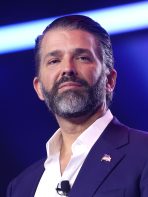
Analysis by the Oversight Committee’s Democratic staff found that World Liberty Financial and other digital-asset schemes co-founded by Eric netted the family’s coffers at least $436 million in profits, and Donald Junior is accused of accepting crypto kickbacks for access. In April, a Reuters analysis reported that the Trump family had earned at least $2.3 billion through April 2026 across its four primary crypto ventures. Junior is also accused of allowing his “dear friend” Umar Kremlev, a Russian oligarch and friend of Vladimir Putin, to bankroll his lavish wedding on a Bahamian private island.
Stephen Miller:
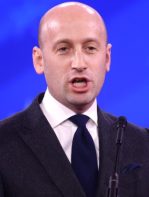
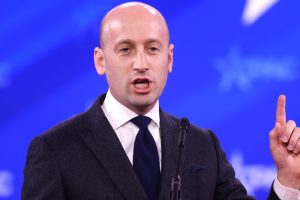
Oversight Democrats say they have “documented 1,165 instances of concerning uses of force,arrests or detentions, deportations, enforcement actions at sensitive locations, and acts of intimidation or retaliation by DHS personnel,” and refused to provide records. Miller knows where all the bodies are buried.
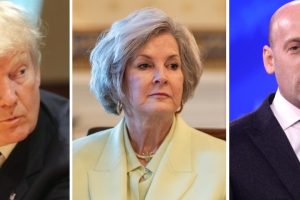
Susie Wiles:
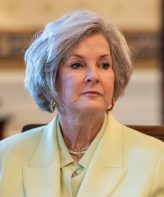
The Oversight Committee notes The New York Times report that Wiles had a central role in hiding information about Jeffrey Epstein from the public, including meeting “in the White House Situation Room multiple times to determine the best way to undermine public interest in the Epstein files.” Garcia cited reporting alleging that Wiles refused to release documents concerning allegations against Trump and shaped the administration’s efforts to avoid compliance with a House Oversight subpoena and the Epstein Files Transparency Act (EFTA). Former Department of Health and Human Services adviser Calley Means publicly alleged that Wiles obstructed certain health initiatives to protect political donations from the sugar industry, quoting her as saying she needed money from “the sugar people to win the midterms”.
JD Vance:

Vance was “the first to suggest that Maxwell be interviewed in hopes of using her testimony to distance President Trump from Epstein.” Vance allegedly participatied in White House Situation Room meetings concerning how to handle records indicating a personal association between Trump and Epstein. Garcia alleged that Vance took a leading role in multiple secret meetings inside the White House Situation Room to strategize on how to undermine public interest in the Epstein files and shield President Trump from scrutiny. According to the letter, Vance reportedly described public attention on Epstein as “a huge problem” and offered assessments on limiting the release of information.
Kimberly Guilfoyle:

Trump Junior’s former girlfriend and the former US Ambassador to Greece is accused of “pay to play” and “quid pro quo” schemes, including “$100,000 in exchange for access to senior Trump Administration officials with the promise of as much as a $1 million payoff later.” Guilfoyle’s alleged target was former Kentucky congressional candidate Eric Deters, who told NPR in October that she had promised him access to Trump administration officials in exchange for paying her $100,000 American Express bill. In exchange for the money, Guilfoyle and her former podcast executive producer, Drew Lynch, allegedly worked to arrange meetings and intervene on Deters’s behalf regarding his personal tax and legal issues with senior Trump administration officials—including FBI Director Kash Patel, FBI General Counsel Sam Ramer, and former IRS Commissioner Billy Long Guilfoyle stepped down from her post soon after.
Kristi Noem:
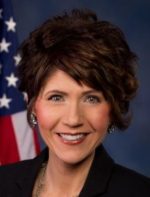
The former head of DHS and her longtime companion are accused of steering “lucrative DHS contracts to political allies and donors, including pushing through the purchase of five airplanes from a connected donor for $303 million on [her] last day as Secretary.” She allegedly used her position for self-enrichment and to benefit associates of the Trump administration, including former DHS senior advisor Corey Lewandowski; undermined career employees; and violence or abuses carried out by DHS or immigration enforcement agents.
Corey Lewandowski:

The committee wants Lewandowski to testify regarding alleged misconduct involving DHS, contracting, and private business activities, including corruption, pay-to-play schemes, self-dealing, and abuse of power during his tenure as a special government employee and senior advisor at the Department of Homeland Security (DHS).
Catherine Townsend:
The little-known President and Chief Executive Officer Trust for the National Mall, which is a nonprofit, is accused of taking $600 million in donor money for the White House ballroom from businesses seeking favorable treatment from the government, such as Nvidia, which wanted an end to investigations by the Commerce Department and permission to sell microchips to China, and are now the center of a major “sexpionage” scandal.
For now, the preservation letters are just warning shots. But once the gavel changes hands, we can expect to see binding subpoenas, executive-power battles, and maybe, just maybe, some actual oversight into the Trump family’s wide-ranging corruption.