





















The Supreme Court applied with great force the sharp toe of its pointed boot to the butts of two lower courts and the National Trust for Historic Preservation when it held that His Majesty’s East Wing ballroom project could continue.
The court took a technical offramp to do so, ruling that the plaintiff, the National Trust, lacked the required constitutional standing to bring the suit.
The four members of the court in the minority held exactly the opposite. (You might recall that out of three judges on the appellate court, one held that the Trust lacked standing.)
More Reading: Trump ‘Crosses Dangerous Line’ With Supreme Court Personal Attacks, Leading Lawyer Group Says
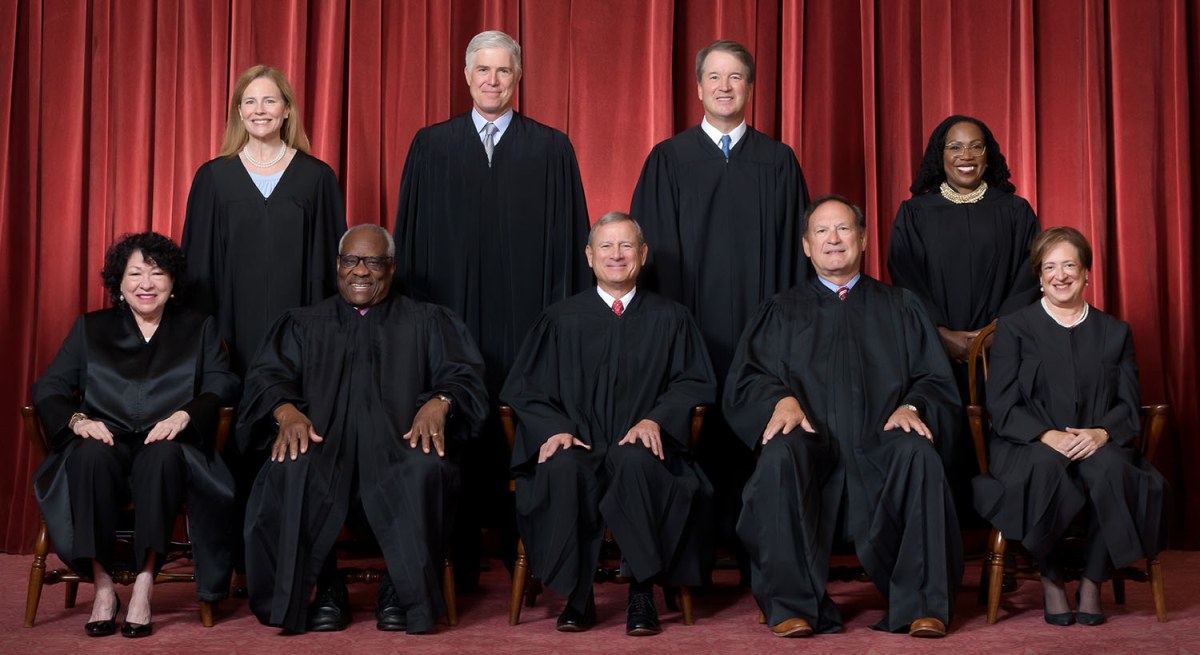
The five in the majority, or any one of them, could have taken the same position the Chief Justice John Roberts and the three liberal justices took. Why didn’t they? I say simply because they did not want to.
I am hesitant to add this, but it should be noted that Judge Neomi Rao of the appellate court, who found no standing, is a Trump appointment.
Justices Brett Kavanaugh, Amy Coney Barrett and Neil Gorsuch are all Trump appointments as well. And, Justices Clarence Thomas and Samuel Alito? Well. there is little good to say about either in most situations.
The case revolved around a government motion to stay a district court’s order requiring the Trump administration to stop construction. In essence, it was asking the Supreme Court to enjoin the injunction issued in a lower court.
To win its case on appeal to the Supreme Court, the government had to establish four things to the court’s satisfaction.
More Reading: Mail Ballot Battle Heats Up as 24 States Move to Block Trump USPS Rule in Court
It is likely to succeed on the merits of its case; it would suffer irreparable harm if the court was to stop construction; that the balance of the equities favored the government and that the public interest would be served.
The court found that the government was likely to prevail on the merits of the case, because the court did not believe that the Trust had standing to bring the suit in the first place.
That means that the lower court, according to the Supreme Court, should have dismissed the case from the start on a motion to dismiss based on lack of standing.
To establish standing a party must prove it has suffered an injury in fact. That some legally protectable interest has been invaded, in this case by construction.
More Reading: Courts in Crisis: Judicial System Struggles With Politics, Bias, Corruption in Age of Trumpism
To establish standing the Trust relied on a declaration from one member who swore that she walked by the construction once a month, and viewing that mess injured her aesthetic and cultural interests.
The majority of five justices held that offense, disagreement or distaste does not create a concrete injury necessary to provide standing.
The government also established to the court’s satisfaction that if the stay was not lifted, it would suffer irreparable harm. With each passing day, the security of the Royal and his visitors would be impaired, it contended.
Measured against the security of the occupant and his visitors was the aesthetic offense of the one member of the Trust.
The court did not rule whether the project was legal or not legal. It didn’t have to get there. It simply ruled that the suit was defective and had to be dismissed for lack of standing.
The other four justices, including the Chief Justice, John Roberts, disagreed with the majority and wrote a dissenting opinion that was the mirror opposite of the majority opinion.
Both sides relied on the same case, reading it differently.
The construction, the dissenters wrote, is likely unlawful and without statutory authority. That was their warm-up.
The four found that the aesthetic injury of the Trust’s one member was concrete and particularized. That it was “undeniably a cognizable interest for purposes of standing.”
The Trust member’s standing was buttressed by the importance of the White House. It is “not just any building-when it comes to historical preservation—[the member] is not just any person.”
Quoting Winston Churchill, the minority wrote ‘’[we] shape our buildings and afterwards our buildings shape us.”
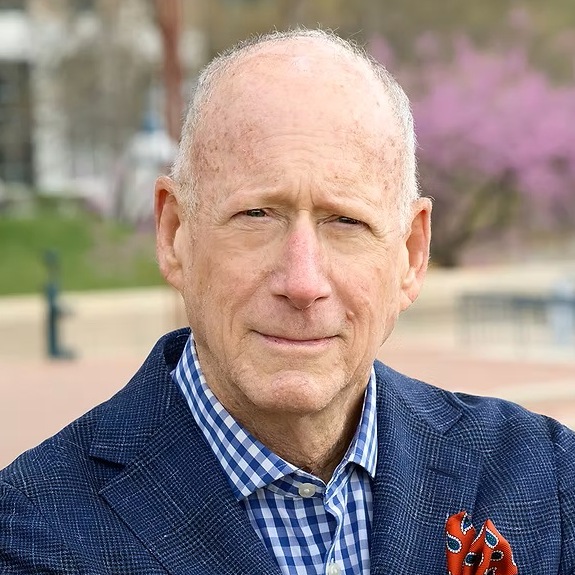
Jim Astrachan is lawyer who represents clients in intellectual property law and litigation, mediation, and business, regulatory, and transactional matters. He’s a Life Fellow of the Baltimore City Bar Foundation, the Maryland Bar Foundation, and the American Bar Foundation.