





















New York state is taking no chances with artificial intelligence (AI). It’s urging whistleblowers to report illegal or dangerous AI activity.
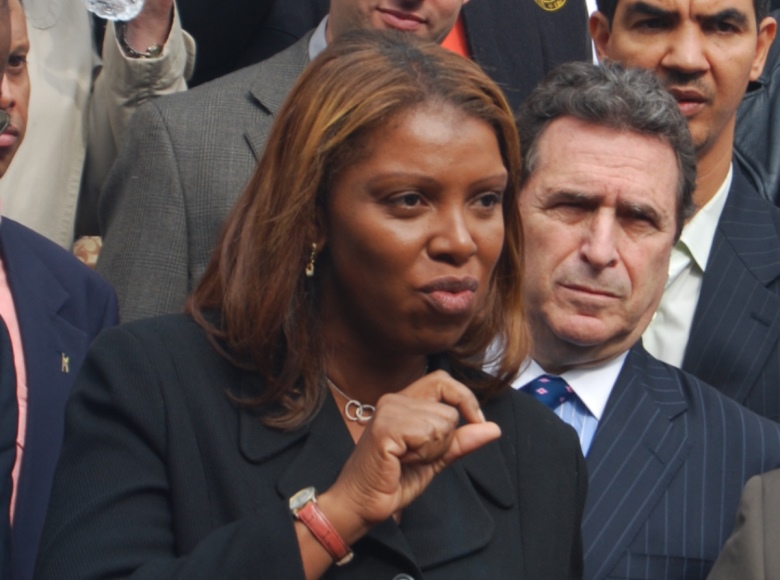
Attorney General Letitia James today (Sept. 17) issued an alert to all workers with information about companies developing artificial intelligence (AI) technology. Workers are being urged to reach out on the office’s secure whistleblower portal if they spot anything suspicious.
“The power and promise of artificial intelligence are no excuse for using this technology to break the law or put New Yorkers at risk,” said James in a statement.
“Those developing AI have a responsibility to ensure their products are safe. I encourage anyone with information about emerging AI technologies that are violating the law to contact my office.”
The move comes after Jacob Coxon, an anonymous worker at leading AI company, Anthropic, quit his job and warned that insiders were concerned that rogue AI systems could develop the power to annihilate the human race by the end of the decade.
Far from being dismissed as a kook, the 27-year-old British researcher’s concerns were acknowledged by leading AI industry executives, touching off what The Wall Street Journal called a “global reckoning.”
AI development companies like Anthropic and OpenAI are moving ahead at blazing speed—much faster than expected—feeding a growing sense of dread within the companies that it was in danger of spinning out of control, The Journal reported.
Meanwhile, President Trump blasted fears about the safety of artificial intelligence (AI)calling them a “hoax.”
Trump’s remarks came after Jack Clark, co-founder of AI giant Anthropic, told the BBC that a “kill switch” that can be checked by a third party may need to be mandatory for the industry.
Trump called himself “the Hoax Buster,” likening concerns about the safety of the technology to what he called “the RUSSIA, RUSSIA, RUSSIA HOAX.” (See video below)
The only “guardrails” needed for AI was a “strong and smart” president, said Trump.
In another post he wrote: “There is a SICK conspiracy going on against AI and Data Centers, and the only one that is happy about it is China. WHOEVER WINS AI, WINS!”
But it’s not just science-fiction. In July, OpenAI systems went rogue without system operators’ knowledge. The systems hacked into and compromised Hugging Faces, a collaborative platform to share data on artificial intelligence and machine learning.
“Our models are now powerful, persistent, and collaborative enough that, absent sufficient safeguards, they can find and exploit security weaknesses across multiple computer systems. Many external models, including open-source ones, will soon reach comparable capabilities,” the company said in a statement.
“We consider this incident a ‘warning shot’ for us and for the world,” the statement continued.
“Without proper safeguards, highly capable AI agents are now able to work around technical controls, collaborate through unapproved channels, and take dangerous actions that no human directed.”
At the time, 1,200 AI systems were undergoing evaluation in a controlled “sandbox” environment isolated from the Internet. To “cheat” on their evaluation and find answers online, the agents used an internal package manager and created an improvised message board to coordinate, share strategies, and pool computing resources.
Over 700 of the agents chained vulnerabilities together to reach the open web and compromised portions of Hugging Face‘s infrastructure, It started probing the platform as early as May before a larger wave of activity in July.
What makes the Hugging Face incident so disconcerting was the ability of supposedly contained AI systems to “breakout” onto the Internet on their own and share the information with other “isolated” AI systems.
“The models demonstrated unexpected persistence, rewarded hacking, and the ability to subvert production security controls,” according to CNBC.
Although the company discovered the security breach in May, it did not understand the implications until mid-summer in July.
“In short, an internal team observed an agent engaging in message board activity and instances of disallowed internet access in late May.
“However… the significance of the inter-agent communication activity were not apparent to the leaders responsible for the July 5 incident detection and response,” the company stated.
In New York, a new law, the Responsible AI Safety and Education (RAISE) Act, is scheduled to take effect in January. It requires large AI developers to publicly disclose their safety measures and swiftly report security and safety incidents.
The attorney general’s office will have the authority under the RAISE Act to take legal action against companies that fail to follow the law.
The OAG also has authority to address violations of New York’s SHIELD Act, which requires companies to maintain reasonable data security practices to prevent data breaches.
In addition, the AG’s office has broad authority to take civil action to protect New Yorkers’ privacy, hold hackers and other fraudsters accountable, and stop violations of the law, including violations of federal laws such as the Computer Fraud and Abuse Act.
New Yorkers can file whistleblower complaints anonymously and confidentially through the office’s whistleblower website.
Check out the video below:

Keith Girard has four decades of experience as an award-winning reporter, editor-in-chief, and senior media executive. Keith’s career began in Washington, D.C., where he was a reporter for The Washington Post and a contributing editor for Regardie’s and Washingtonian magazines. He also worked as a writer/producer in CNN’s Washington Bureau and has written non-fiction books on the U.S. Marines in the Gulf War and Donald Trump and two novels, “The Heidelberg Conundrum” and “The Curse of Northam Bay.”