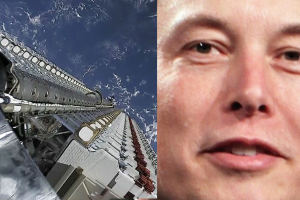




















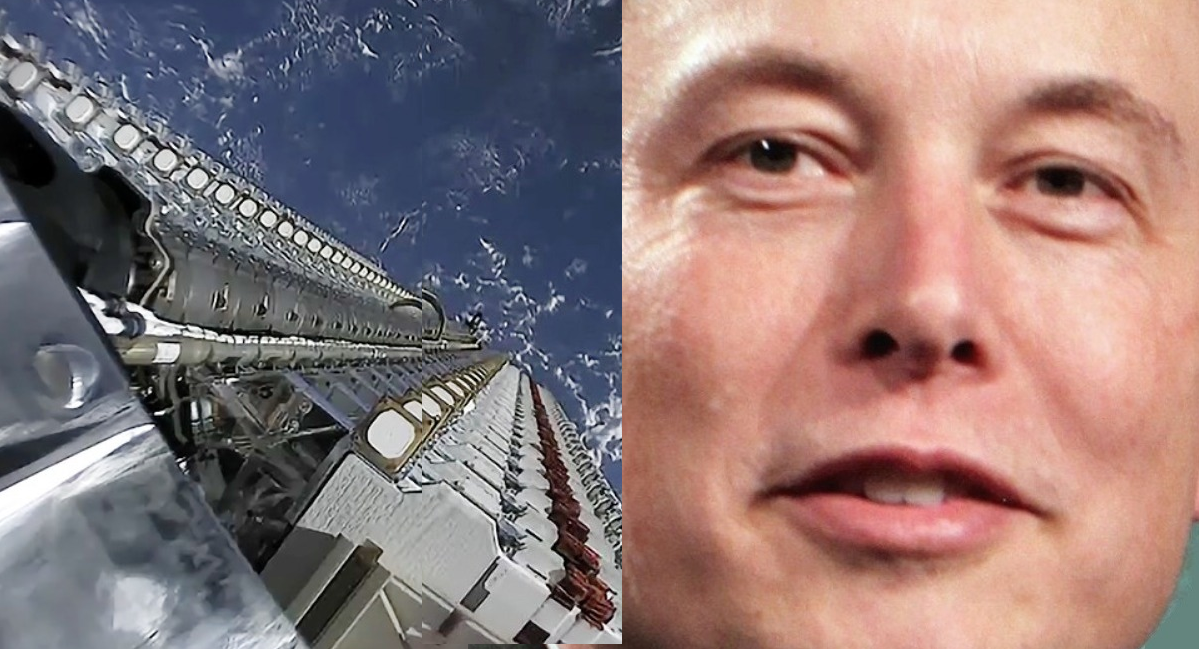
Elon Musk’s ability to disable Ukraine’s Starshield military internet should raise red flags for Congressional lawmakers who must remove the billionaire’s control of the system.
Musk’s actions in Ukraine demonstrate he has the power to unilaterally do the same here to all Tesla cars, charging stations and Starlink-based Internet service, to further Donald Trump’s political ambitions.
This is more than a five-alarm fire; Musk must be called before a Congressional committee to testify, leading to legislation safeguarding SpaceX from further political tampering.
Here’s the chilling scenario: Trump loses the midterms so badly he hatches a scheme to invoke the insurrection act and seize the government. Musk triggers the crisis by disabling the estimated 3 million Tesla cars on the road and the 2.7 million customers who use Starlink for Internet service.
Musk also controls 3,600 Supercharger stations containing over 38,500 fast-charging ports, roughly half of those available in the United States. In addition, as many as 700,000 Tesla Powerwall units are currently operating and equally interconnected and vulnerable to a shutdown.
The recent geopolitical events with Starshield in Ukraine provide a perfect, real-world blueprint for how this would work.
The recent restrictions placed on Ukrainian Starshield terminals—where connectivity was choked or dropped entirely for any terminal moving faster than 100 mph —proves that software-defined networks can be modified or disabled with a single logic change.
Whether the order originates from a corporate executive or a government directive, the mechanism remains a function of software and connectivity.
If applied to a Tesla vehicle fleet, this same type of software interactivity means a total shutdown wouldn’t even require a crude “kill switch.” Instead, it could be executed through everyday programmatic parameters.
Speed Capping: Just as Starshield terminals were throttled above a specific speed to disable drone interceptors, a vehicle fleet could have its maximum speed software-capped to 0 mph, effectively bricking the cars next time they park.
Geofencing: SpaceX has frequently used geofencing to determine exactly where Starlink is and isn’t allowed to function. Similarly, Musk’s company could draw a digital perimeter and command all vehicles inside that zone to revoke their “PIN to Drive” authentication or disable battery contactors.
Feature Blacklisting: Centralized servers maintain a master registry of every active terminal or Vehicle Identification Number (VIN). A simple update to that database can instantly revoke the digital handshake required for the car to operate.
The upshot is when a machine’s primary functions are dictated by continuous, remote software interactivity, the line between a functioning product and a bricked asset is entirely determined by whoever controls the server.
While cyber security laws are evolving to address this scenario, it’s clear from a number of recent incidents that Trump has no respect for laws and with a totally co-opted Justice Department, there is no way to enforce them.
Of course, the government has the power to order a mandated Internet shutdown of all services under Section 706 of the Communications Act of 1934. The statute grants sweeping “war powers” to the executive branch.
While the law was written well before the advent of electric cars or the Internet — and intended for situations like World War II — it covers over-the-air radio broadcasts and wire communications that could be construed to apply to modern day services.
If Trump were to declare a “state of public peril,” a disaster, or a national emergency, the government can suspend wireless service or order the closure of radio and mobile communication stations.
That includes the ability to shut down or seize control of “any facility or station used for “wire communication.” This includes the physical broadband lines that power home and corporate internet.
Legal experts and federal regulators have noted that Section 706 requires zero advance notice to Congress.
To activate it domestically, a sitting president would only need a formal legal opinion from the Attorney General confirming that the emergency threshold has been met.
There is one key difference, however.
Shutting down a massive, traditional provider like Verizon, Comcast or other service is incomparably more difficult and requires a formal government directive, and the services would have the ability to immediately appeal to a court.
In contrast, Starlink can be controlled by the unilateral choices of Musk and SpaceX’s leadership.
The difference between the two boils down to how their infrastructure is built and who holds the keys to the servers.
Starlink is a vertically integrated, proprietary ecosystem. SpaceX owns the satellites, the ground gateways, the consumer dish software, and the central network servers.
If Musk orders a change to the system’s logic or subscriber registry, his engineers can implement it globally in a matter of minutes. No one else has to agree or coordinate.
Verizon does not have a single “owner” who can make a snap decision. It is a publicly traded corporation answerable to a board of directors, public shareholders, and thousands of institutional investors.
More importantly, its network is highly decentralized. It consists of millions of physical cell towers, thousands of localized routing facilities, and a vast web of fiber cables integrated with other competing networks.
There is no central server where one person can push an update to “turn off” Verizon.
Out of the roughly 4.1 million battery-electric vehicles (EVs) registered in the United States, Tesla accounts for more than half of the entire domestic EV fleet.
The overwhelming majority of Teslas on American roads belong to just two models: the Model Y (the top-selling EV in the nation) and the Model 3 (the second most common). Combined, these two models make up nearly 97% of Tesla’s ongoing domestic sales volume.
The saving grace on the transportation front is Tesla’s relatively small footprint in the total U.S. domestic car market. Teslas currently comprise just over 1% of the roughly 292 million total registered passenger cars and light trucks navigating U.S. roads.
Still a sudden shut down would cause significant disruption.
California has the highest concentration of Teslas in the nation, accounting for roughly 39% of all Tesla and electric vehicle registrations, followed by Florida, Texas, Washington state and New York state.
Starlink has been aggressively promoting its Internet service, but so far, its 2.7 million subscribers are concentrated in rural areas where traditional Internet service is unavailable.
Congress and the public is well aware of the havoc that artifical intelligence can cause to our interconnected society, but Musk’s control of Tesla and Starlink is a near equal threat.
Musk has already demonstrated he’s willing to manipulate Starlink to achieve political ends regardless of the cost on the ground to civilians under bombardment from Russian ballistic missiles.
The decision to unilaterally curtail Starshield without notice, whether it was Musk’s alone or inconjunction with the president, is a serious warning flag that needs to be addressed immediately to keep it out of Musk’s already demonstrated illegal, imoral and unethical hands.
(Editor’s note: This post was written with the assistance of artifical intelligence.)
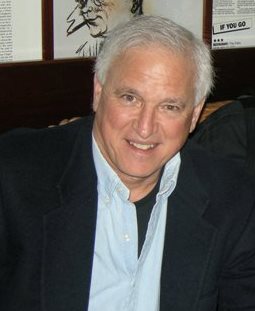
Keith Girard has four decades of experience as an award-winning reporter, editor-in-chief, and senior media executive. Keith’s career began in Washington, D.C., where he was a reporter for The Washington Post and a contributing editor for Regardie’s and Washingtonian magazines. He also worked as a writer/producer in CNN’s Washington Bureau and has written non-fiction books on the U.S. Marines in the Gulf War and Donald Trump and two novels, “The Heidelberg Conundrum” and “The Curse of Northam Bay.”