











Alas, poor Jim Comey.
In May 2025, Comey published on social media a beach picture of seashells arranged to spell “86 47.”
A year later, he was indicted in North Carolina on felony charges of threatening Donald Trump’s life.
(Editor’s note: Offically, Comey is charged with threatening the President under 18 U.S.C. § 871(a) and transmitting a threat in interstate commerce under 18 U.S.C. § 875(c). Convictions carry up to a 10-year sentence for each count)
You say the charges are nonsense, ridiculous. You believe that what he did was protected first amendment expression, and that no one in their right mind would reasonably believe that he was suggesting any harm befall the president.
More Reading: Donald Trump ‘Pee Tape’ Rears Its Ugly Little Head in James Comey Book (Video)
You probably also say that as the head of the FBI and a former federal prosecutor, the man understands the difference between criminal conduct and non-criminal conduct, and that he would not engage in criminal conduct.
Almost all would believe that what he was doing was suggesting in a clever fashion that the president be non violently removed from office. For example, under the 25th amendment, or by impeachment and conviction in the Senate.
There are four motions pending in an effort to dodge these charges, but it is likely that Comey’s claim that his expression was protected by the first amendment and meant no harm will have to wait until trial.
More Reading: Donald Trump Running Scared For First Time After James Comey Testimony
He argues there is no threat, but that question is probably going to be left for a jury to determine after hearing the evidence, although he might have an option to short circuit these charges after the government presents its case.
The question is whether under Supreme Court holdings, Comey meant to suggest an act of unlawful violence.
The government’s burden at trial is to show that the so-called “reasonable person“ would understand Comey’s photo to be a threat to Trump and that Comey was aware that his viewers would understand that photo as a threat.
More Reading: FBI’s James Comey Back on Hot Seat Over Trump Campaign Russian Connection
The reason that this question will be left for a jury to decide is a need to determine the way that a reasonable person, or a reasonable jury, would understand the picture.
Violence or something else? The only way a jury can make this determination is to hear evidence at trial.
In the fourth circuit, where the indictment was brought, the law is that a court may not dismiss on its own determination of facts that should’ve been heard by a jury, and so it is not likely this court will make a determination prior to trial that there was no possible context in which the facts presented in the indictment could rise to the level of a real threat.
More Reading: Donald Trump Golden Showers Trends After Michael Cohen Claims
The only way Comey is likely to avoid a jury determination, even if trial begins, is at the conclusion of the government’s case he moves to be acquitted on the basis that the evidence as developed does not support the charges. That would be for the judge to determine.
He also claims that the indictment was vindictive; he sought to dismiss it on the grounds that his prosecution was selective.
He’s going to need to establish that he was charged because he exercised a legal right; a first amendment protected expression, and that the prosecution was based on animus.
Although Trump may hate Comey, and he surely has publicly expressed this, Comey will need to establish that the prosecutors also had animus towards him.
That’s a high hurdle to clear.
Likely, he will use Trump‘s termination of [Former Attorney General] Pam Bondi for not acting quickly enough to indict Trump‘s enemies, and current Attorney General Todd Blanche’s assertion that the Attorney General is not independent from the president.
Most people would believe that this action was directed against Comey by the president.
To establish selective prosecution, his defense will need to show bad faith and discrimination against him when others have not been prosecuted for doing the same thing.
If people are inclined to use the same expression that Comey did, “86 47”, maybe they should hold off for a while, so as not to give the government an opportunity to claim that there is no discretion by indicting them.
Two more motions were filed both involving what was told to the grand jury, and Comey has sought the grand jury transcript. There’s been no ruling.
Where this case is going is anybody’s guess, although it seems to this “reasonable person” that Comey hardly meant to express harm to the president, and he should be acquitted, if the court finds a trial to be necessary.
But this shows that exercising first amendment rights can prove risky and expensive when a vindictive president occupies the Oval and his Attorney General does not see his role as being independent.
This never should’ve happened, but this is the world in which we live in, at least for now.
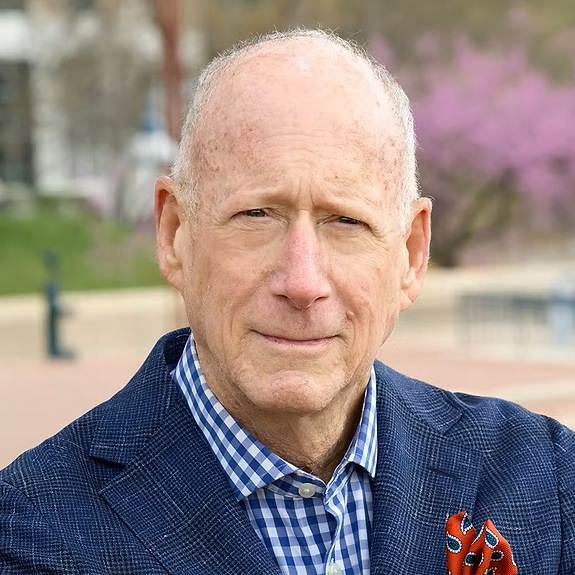
Jim Astrachan is lawyer who represents clients in intellectual property law and litigation, mediation, and business, regulatory, and transactional matters. He’s a Life Fellow of the Baltimore City Bar Foundation, the Maryland Bar Foundation, and the American Bar Foundation.