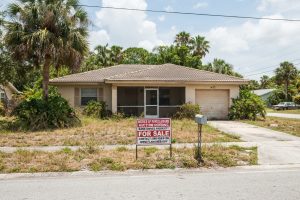










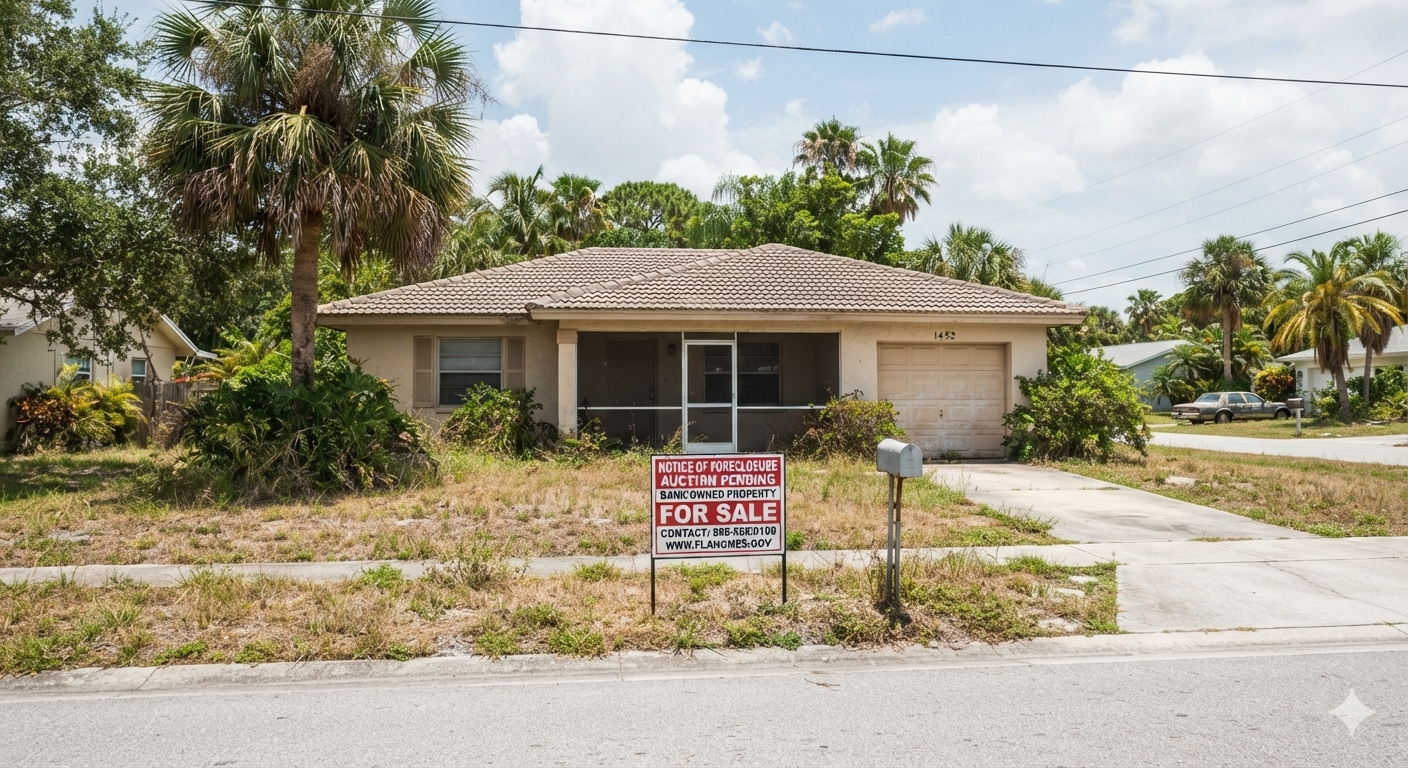
A near perfect storm of rising property taxes and insurance, elevated living expenses and limited refinancing options are spiking home foreclosures across the country, with Republican dominated red states hardest hit, according to a new report.
All of the factors are symptomatic of deteriorting economic conditions, driven chiefly by inflation and soaring fuel prices since President Trump launched his illegal war in Iran.
The housing situation could weigh heavily in the upcoming midterm elections. Repbublicans, led by Trump’s historically low approval rating on the economy in most polls, are facing a potential blow out in House and Senate races.
Foreclosure filings continued to rise nationwide in the first quarter of 2026, with total activity up 26% from a year ago, according to a new report by realtor.com, The results marked a six-year high.
Pandemic-era mortgage-relief measures and stimulus payments led to a huge drop in foreclosures in 2020, but many of those relief measures have expired and foreclosures are now on pace to top pre-pandemic levels according to media reports.
During the first three months this year, Indiana, South Carolina, Texas and Florida posted the most foreclosures. The total includes default notices, scheduled auctions, and bank repossessions.
Foreclosure initiations were up 20% from a year ago, while completed foreclosures increased 45%. Still, the number of homeowners losing their properties is far below the subprime mortgage collapse of 2007, according to ATTOM, which tracks the market.
“The continued rise, especially in starts and bank repossessions, suggests financial pressure may be building for some homeowners and could signal shifting housing market dynamics,” ATTOM CEO Rob Barber told the real estate website.
“Foreclosure activity increased in the first quarter, with both starts and completed foreclosures posting solid year-over-year gains,”
The state with the worst foreclosure rate in the first quarter of 2026 was Indiana, with 1 in every 739 housing units there showing a foreclosure filing.
Indiana, where the Republican party completely controls state government, is leading the nation in foreclosures, despite relatively low median home prices under $300,000.
“There are a few reasons why Indiana might have the highest rate of foreclosures,” says Realtor.com senior economist Joel Berner. “The first is that it’s a smaller state with fewer housing units, so the data can tend to be a little noisy from quarter to quarter.”
The second reason, says Berner, is that home prices are generally lower in Indiana, meaning that homeowners build equity more slowly and have less of a cushion when economic adversity strikes, especially if they’re highly leveraged with a relatively large mortgage.
“The third is that the ancillary costs of homeownership—like property taxes, homeowners insurance, HOA fees—are growing everywhere, and in lower-priced states like Indiana, those costs make up a larger percentage of the monthly payment and have an outsized impact,” says Berner.
Rising ownership costs can have a greater impact in lower-cost markets, he added.
Behind Indiana on the list of states with the highest foreclosure rates are South Carolina (1 in every 743) and Florida (1 in every 750).
In Flordia, where Republicans also control the executive and legislative branch, “insurance, property taxes, and HOA fees have all gone up, and many owners just cannot keep up anymore,” Ron Myers, of Ron Buys Florida Homes, told realtor.com.
On a more localized level, Lakeland, Fla., leads the nation’s cities in foreclosure rates, followed by Punta Gorda, Fla. Following them were FAyetteville, NC, and Macon, Ga.
“Energy costs impact every product and service we buy, and I expect inflation to continue to increase,” attorney Bruce Ailion, of Re/Max Town & Country, tells realtor.com.
Since Trump ordered a massive strike on Iran in February, the national average for regular gasoline has risen by $1.67 per gallon. The cost of diesel fuel has risen even faster and now tops $6.20 a gallon.
Before the war, regular gasoline averaged $2.81 per gallon, and peaked at a monthly average of $4.48 per gallon in May.
Diesel fuel price increases hve been significantly more severe, surging by $2.68 per gallon—amounting to a 73% increase—since the conflict began. Because diesel fuel powers the world’s supply chain — from trucks and trains to ships at sea — and agriculture, the long-term affect on inflation could be significant.
Persistent, so-called “sticky” inflation and a resilient economy, caused the Federal Reserve this week to hike interest rates by a quarter percentage point to 3.75% to 4.0%, which will increase costs throughout the economy.
The goal is to cool demand and lower inflation closer to the Fed’s target rate of 2%. But interest rate sensitive items, like mortgages, credit cards, car loans and consumer loans will become more expensive, adding pressure on homeowners.
Keith Girard has four decades of experience as an award-winning reporter, editor-in-chief, and senior media executive. Keith’s career began in Washington, D.C., where he was a reporter for The Washington Post and a contributing editor for Regardie’s and Washingtonian magazines. He also worked as a writer/producer in CNN’s Washington Bureau and has written non-fiction books on the U.S. Marines in the Gulf War and Donald Trump and two novels, “The Heidelberg Conundrum” and “The Curse of Northam Bay.”