

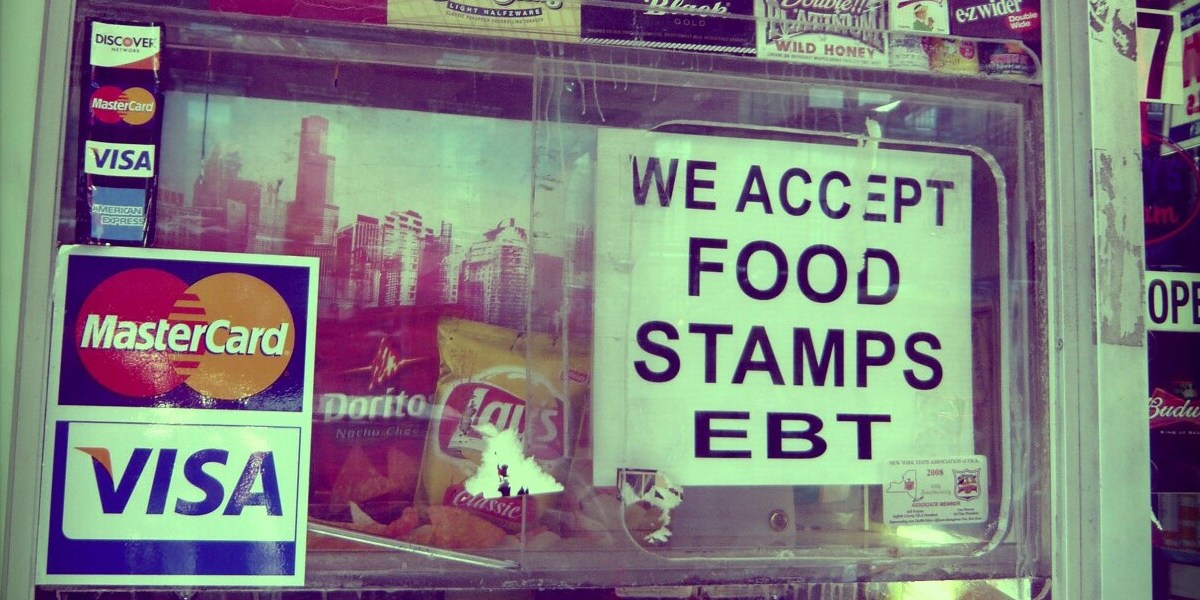
New York City food stores. like this Brooklyn deli, have a long history of accepting federal food stamps. (Photo: Clementine Gallot)
The Trump administration’s largest reduction to food assistance to the poor in modern history is being challenged in Congress by a coalition of state Attorneys General.
The so-called Supplemental Nutrition Assistance Program, known as SNAP, will be debated in Congress as part of the Farm Bill, the omnibus, multiyear federal law that governs an array of agricultural, food, conservation, and rural development programs.
New York Attorney General Letitia James and a coalition of 22 other state attorneys general jointly sent a letter to Congress today urging lawmakers to reject efforts to reduce food assistance for families, seniors, veterans, people with disabilities, and working people.
Trump cuts to the program, they argue, are increasing hunger, creating new bureaucratic hurdles for eligible families, and shifting billions of dollars in costs onto state and local governments.
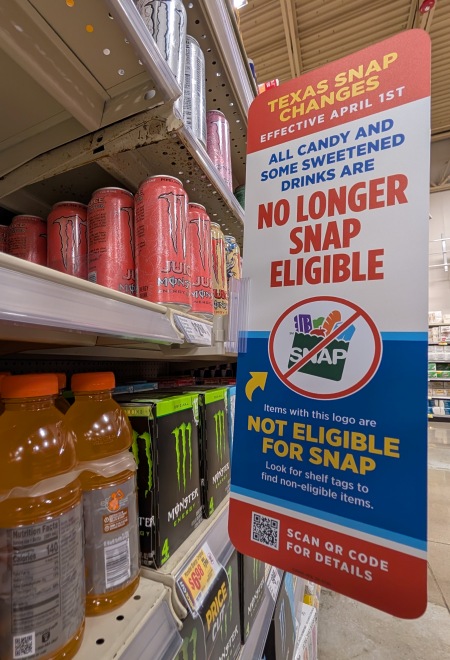
Under Trump administration changes to SNAP, some so-called ‘junk foods’ are no longer eligible to buy in some states. (Photo: Turbotann)
“SNAP helps millions of Americans put food on the table and supports the farmers and grocers that feed our communities,” said James in a statement.
“Our representatives in Washington need to understand the consequences of these cuts and the families, veterans, and seniors they are hurting.”
Domestic farmers capture nearly a quarter of every dollar spent on food at the grocery store. The Food Research & Action Center noted that cutting SNAP directly strips billions in revenue from agricultural producers.
More than 42 million Americans participate in SNAP each month, and 80% of SNAP households include a child, senior (aged 60+) or disabled person.
Children make up 16.9 million, or 40% of recipients and 7.8 million seniors (60+) make up 18% of recipients. People under 60 with disabilities make up 4.5 million or 11% of recipients, according to federal figures.
The letter is addressed to Senate Majority Leader John Thune, Senate Minority Leader Charles Schumer, Senate Committee on Agriculture, Nutrition, and Forestry Chairman John Boozman, and committee ranking member Amy Klobuchar.
“As the Senate considers the next Farm Bill, it has an opportunity to reaffirm a bipartisan commitment that no American should go hungry because they cannot afford food,” the group said in a press release.
The issue has taken on critical importance now as inflation rises, pushing food costs up, in some cases by double digits.
In the latest reading on the economy, the Personal Consumption Expenditures (PCE) index rose 3.8% in April, up from 3.5% in March, according to the U.S. Bureau of Economic Analysis (BEA), which tracks inflation.
In the latest reading, the annual inflation rate hit 4.2%. The cost of a typical basket of consumer goods and services is 4.2% higher than it was a year ago, according to the U.S. Bureau of Labor Statistics.
The figure represents a three-year high and is roughly double the Federal Reserve’s long-term target of 2%.
Overall food costs have risen 3.1% year-over-year. Beef, veal and vegetables are leading with price increases of 12.9% for the former and 6.1% for the latter. Some prices have declined, notably eggs and dairy products.
New federal restrictions passed in the “One Big Beautiful Bill Act,” including expanded work requirements and additional administrative hurdles, make it significantly harder for New Yorkers to keep their benefits or threaten to push them off the program altogether.
In January, Indiana, Iowa, Nebraska, Utah and West Virginia banned certain so-called “junk foods,” like soda and candy under waivers to SNAP granted by the Trump administration. Previously, the government considered such restrictions an impingement on personal freedom.
In their letter, James and the coalition argue that expanded work requirements and administrative hurdles do not create jobs or reduce poverty. Instead, they cause eligible families to lose assistance because they are unable to navigate increasingly complex bureaucratic requirements.
New cost-sharing provisions require states to shoulder billions of dollars in new costs while imposing substantial new administrative burdens, a significant shift from SNAP’s longstanding federal commitment to ensuring that Americans do not go hungry during times of need.
In New York alone, these changes could cost well over $1 billion per year beginning in 2027.
The Farm Bill recently passed by the Republican controlled House failed to reverse program cuts.
As such, the coalition is urging the Senate to restore SNAP benefit funding, reverse or delay new cost-sharing requirements, and roll back expanded work requirements and eligibility restrictions.
They also urge the Senate to reject further benefit cuts, preserve state flexibility, and strengthen access to nutrition assistance for seniors, children, veterans, and working families.
Joining Attorney General James are the attorneys general of Arizona, California, Colorado, Connecticut, Delaware, Hawaii, Illinois, Maine, Maryland, Massachusetts, Michigan, Minnesota, Nevada, New Jersey, New Mexico, North Carolina, Oregon, Rhode Island, Vermont, Virginia, Wisconsin, and the District of Columbia.
Images in this post are licensed under the Creative Commons Attribution 2.0 Generic license.