


Gasoline prices are expected to surge with shortages possible, because of Trump’s war. (Photo: NYI)
A gasoline shortage unlike any seen since the Arab oil embargo 50 years ago is only a few weeks away — triggered by the Iranian war stalemate — and nothing can be done to stop it at this point, according to industry experts.
Prices are expected to spike and even double already high prices while shortages could occur in some markets, leading to long lines and even rationing.
Chevron CEO Mike Wirth and Exxon Senior Vice President Neil Chapman warned last week that oil companies and countries have drawn down reserves to shockingly low levels.
“We’re approaching unheard-of inventory levels. … Once you get to that point, then you’ll see price shoot up,” Chapman said at a Bernstein Research conference in New York City last week.
The 1973-74 oil crisis was caused by an Arab-led oil embargo against the United States for providing Israel with $2.2 billion in emergency military aid during the Yom Kippur War.
The embargo quadrupled the price of global crude, caused shortages, long lines and gas rationing around the world.
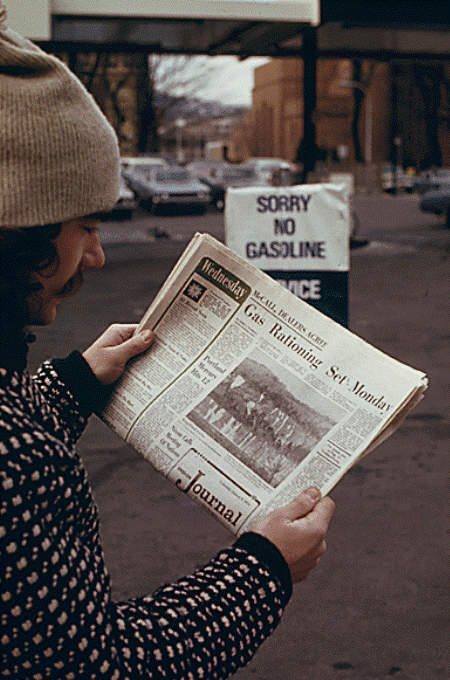
The 1973-74 Arab oil embargo caused nationwide shortages of gasoline. (Photo: US Govt)
A smilar surge in global energy prices is expected in the next several weeks, according to industry executives, who have been warning of dire consequences from the closing of the Strait of Hormuz, source of a fifth of the world’s oil supply.
The administration has been draining U.S. strategic reserves to moderate prices, but gas has increased an average of 136% since Trump launched the unprovoked war.
Total stocks of crude and petroleum products such as gasoline fell by 10.6 million barrels last week to 1.57 billion barrels — the lowest level since 2004, according government data released yesterday (June 3).
It can’t last forever.” said Chapman.
Ironically, Trump sharply criticized former President Joe Biden for tapping U.S. reserves when post-pandemic gas prices surged. But now he’s doing exactly the same.
Industry analysts, however, are sounding the alarm. Fuel supplies are so low, even opening the strait immediately would not head off soaring prices by the July Fourth holiday.
Indeed, prices could surge to $200 per barrel this summer. Brent Crude is currently trading around $96 a barrel.
The average price of a gallon of gas nationally was $4.24 for regular and as high as $5.12 for premium. Diesel fuel averaged $5.39 a gallon. Before Trump’s war in Iran, regular gasoline averaged $2.98 per gallon nationally.
Sharply higher prices will hit likely during the height of the summer travel season in late June or early July, ahead of the big July 4 travel weekend.
Rising prices are punishing Trump and Republicans politically, causing Trump to repeatedly claim prices will subside as soon as the war is resolved.
The Trump administration is working to bring an end to the war, reopen the strait and mitigate costs for consumers, according to the White House.
“President Trump and his energy team anticipated short-term market disruptions, communicated them openly to the American people, and implemented an aggressive plan to mitigate any impacts,” White House spokeswoman Taylor Rogers told The Washington Post.
“When the President forces this conflict to a successful end, gas prices will drop back to multi-year lows and global energy markets will be much more stable in the long term.”
But since Trump launched his attack three months ago, he has not been able to break the stalemate with Iran. Most recently the Islamic Republic ended all negotiations with the administration.
Consumer advocates say the best ways to beat a surge in prices are using apps to find the cheapest stations, plan out errands to reduce driving, and maximize fuel economy by driving slower.
Gas mileage drops significantly for most vehicles at speeds over 60 mph. Using cruise control and driving at the speed limit can improve fuel economy by up to 14%.
Rapid acceleration and sudden braking can lower gas mileage by roughly 15% to 30%, while letting a car run while waiting or parked wastes up to a half gallon of gas per hour.