






















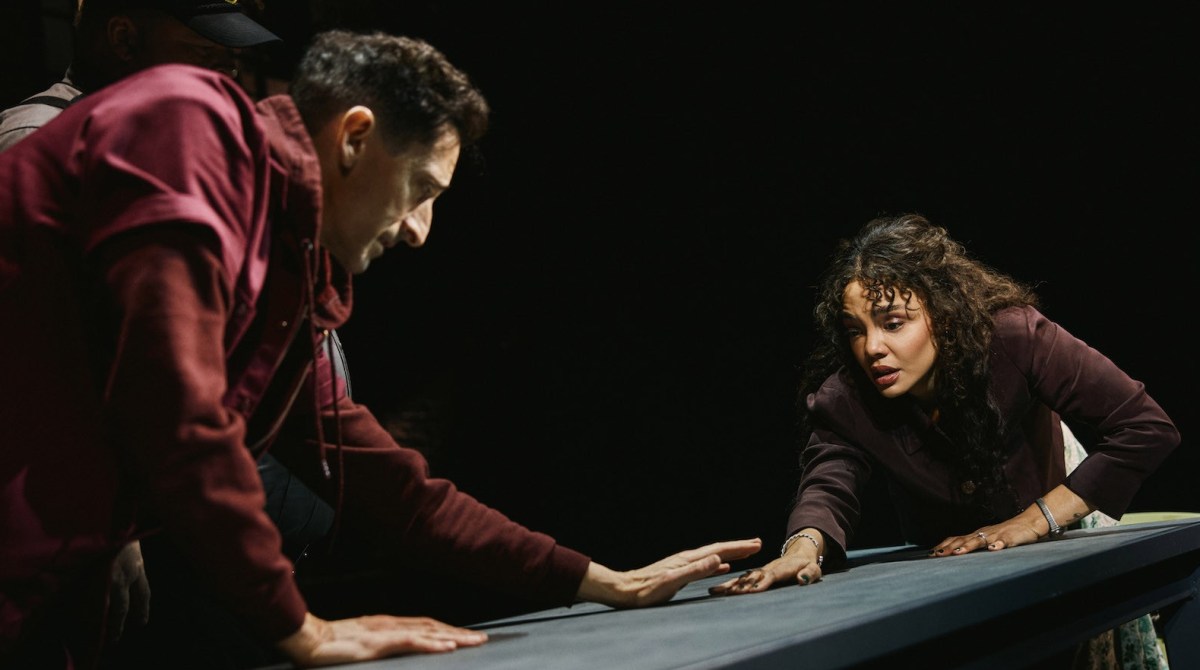
A rare kind of theatrical experience doesn’t simply tell a story, but seems to burrow under your skin and stay there long after the curtain call.
The Fear of 13, now on Broadway at the James Earl Jones Theatre, is precisely that kind of work — haunting, meditative, and emotionally unrelenting in the best possible way.
Thanks to David Cromer’s astute direction, the play packs a powerful, daunting punch.
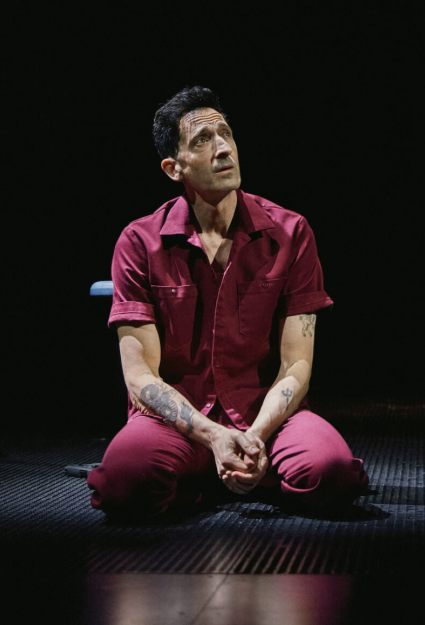
Based on the extraordinary true story of Nick Yarris, the play traces the life of a man wrongfully convicted of murder and sentenced to death. Ultimately, he spends over two decades on death row before being exonerated.
The title itself refers to a phobia known as triskaidekaphobia (the fear of the number thirteen). But in this context, it becomes a layered metaphor for fate, injustice, and the psychological toll of waiting for an end that may or may not come.
The narrative unfolds in a nonlinear structure, weaving together Yarris’s past, his years in solitary confinement, and the slow, fragile process of reclaiming a life once the system has nearly destroyed it.
What makes the production so compelling is the remarkable depth of Lindsey Ferrentino’s storytelling. The script is introspective without becoming indulgent, poetic without losing clarity.
It asks difficult questions about justice, identity, and survival, and trusts the audience to sit with discomfort rather than offering easy answers.
There is a profound emotional intelligence at work, with moments of silence that are as meaningful as the most impassioned monologues, and the play’s restraint only heightens its impact.
Visually, the production is striking in its simplicity.
Arnulfo Maldonado’s set design employs a minimalist aesthetic that mirrors the barren isolation of a prison cell, yet it transforms fluidly to suggest memory, time, and psychological space.
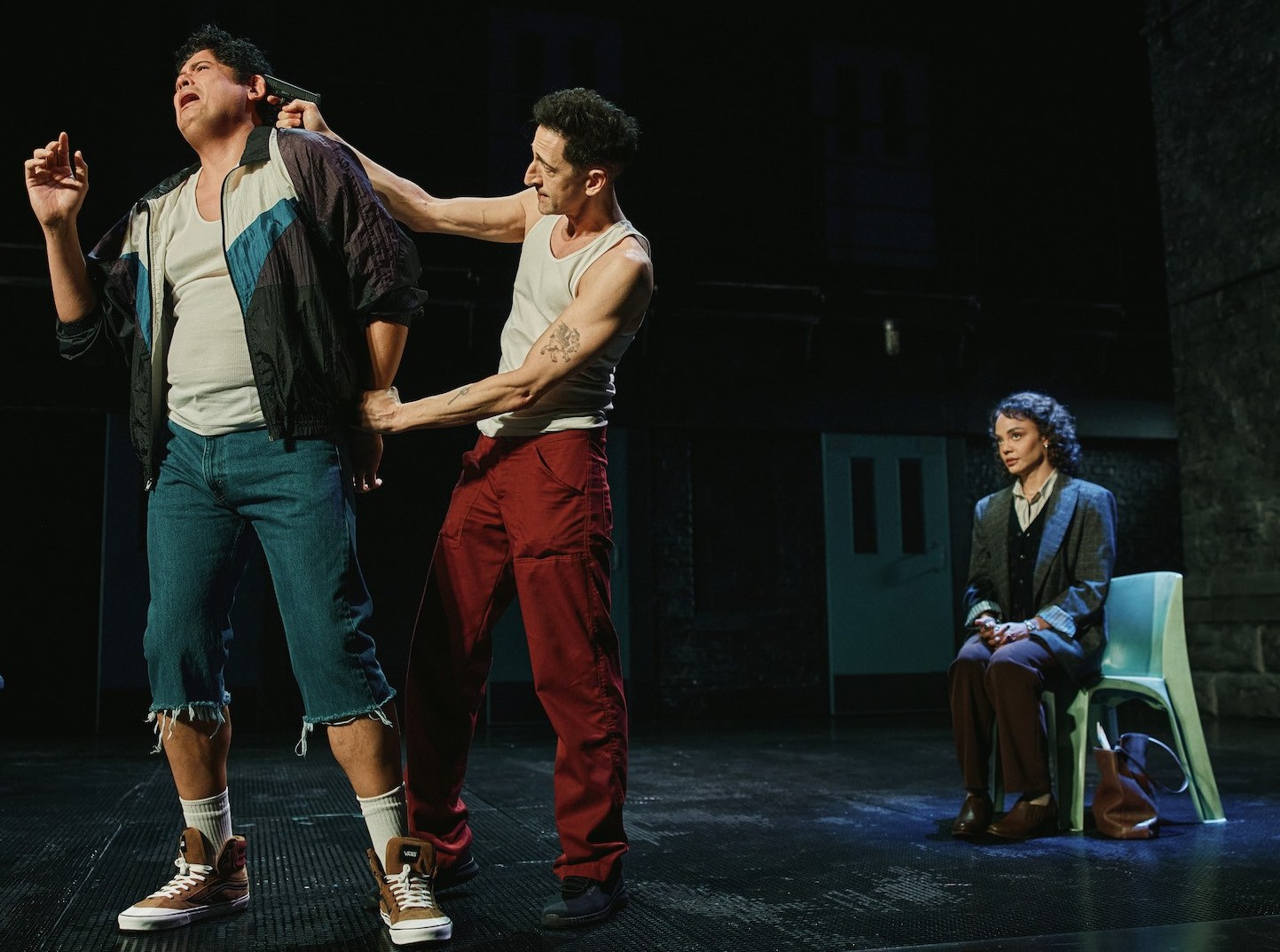
The few sets in which alternate pieces move into the central space (a pawn shop, a cramped apartment) serve to remind audiences of the stark world inhabited by the inmates. The attention to detail is stunning.
Heather Gilbert’s lighting also plays an especially crucial role, shifting with precision to delineate past and present, reality and recollection. At times harsh and clinical, at others soft and almost dreamlike, it becomes an emotional barometer for the piece.
Sarah Laux’s costumes are thoughtfully considered as well. They are grounded in realism, but subtly reflective of each character’s inner life, particularly in the latter half of the play.
Where the production falters, unfortunately, is in its casting.
Adrien Brody never quite finds his footing as Yarris. The two-time Best Actor Academy Award winner’s performance feels studied rather than lived-in, and his attempt at a thuggish New England accent is distracting at best, grating at worst.
Altough he was nominated for a Best Actor Laurence Olivier Award for his role in the West End production of the drama, there’s a sense he’s “performing” incarceration rather than inhabiting the role.
His physicality, particularly in the death row sequences, comes across as exaggerated, almost theatrical in a way that clashes with the production’s otherwise grounded tone. The result is a portrayal that veers uncomfortably close to caricature.
Similarly, Tessa Thompson is underserved by the role of Jacki Miles, a prison volunteer who lacks dimension. While Thompson brings her usual poise and control, the character is so thinly drawn that it gives her little with which to work.
The part feels interchangeable, and one can’t help but think that any number of capable ingénues could have stepped into it with similar results.
The most effective performances were given by the Greek chorus of inmates and police officers populating the small world around Yarris and Miles.
Ephraim Sykes (Ain’t Too Proud) truly makes an impression, thanks to a hauntingly beautiful song that pierces the show’s sense of resignation.
When laughs are to be had (and there are many moments, surprisingly), many of them are due to the crafted performances of Joel Marsh Garland’s guard and Michael Cavinder’s multitude of roles.
Though the headliners’ performances are disappointing, it does little to diminish the overall power of the production.
The Fear of 13 remains a deeply affecting piece of theater, one that confronts the audience with uncomfortable truths and lingers in the mind long after the lights come up.
It is, at its core, a story about endurance and the fragile, stubborn hope that persists even in the darkest of places.

Iris Wiener is an entertainment writer, editor, reporter and theatre critic based in New York. Her portfolio contains a diverse collection of work on all genres of entertainment. Her reporting has been featured in more than twenty publications, including Newsday, Playbill, TheaterMania, Encore Monthly, Weston Magazines, and Long Island Woman. She is a proud voting member of the Drama Desk and The Outer Critics Circle.