






















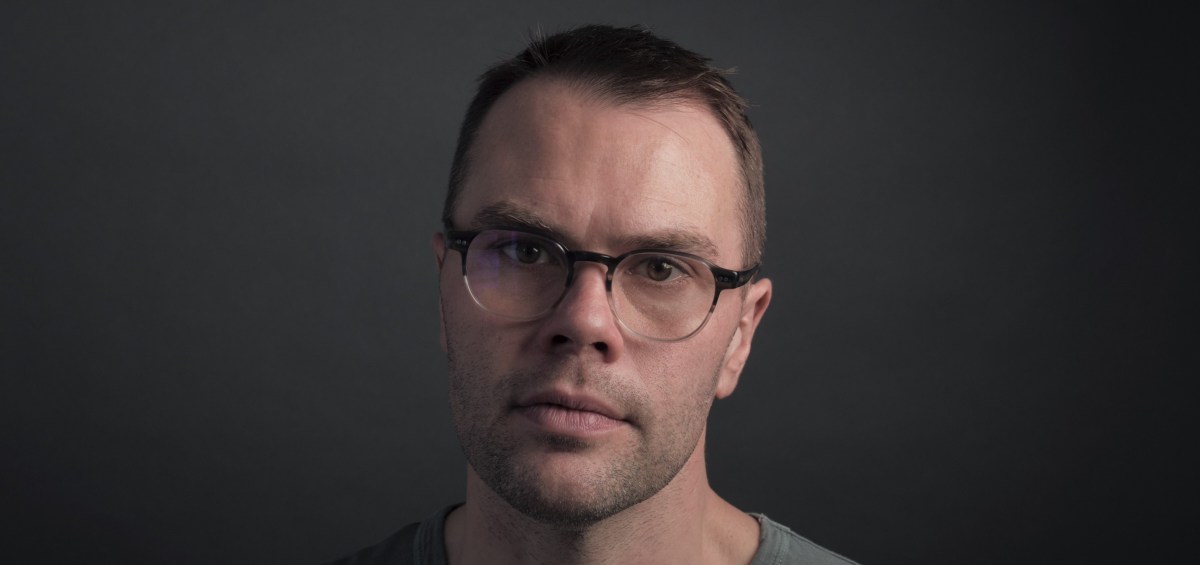
Few contemporary American playwrights have so consistently insisted on the power of quiet as Samuel D. Hunter.
Born in Idaho, Hunter is known for intimate, rigorously observed dramas that center on ordinary people grappling with loss, belief, and the vastness of simply existing.
His plays—including The Whale (for which he won the Drama Desk, Lucille Lortel and GLAAD Media awards), A Case for the Existence of God, Grangeville, and Little Bear Ridge Road—resist theatrical spectacle.
Instead, favor of precision, restraint, and emotional honesty are their hallmarks, asking audiences to lean in rather than be swept up in spectacle.
In an interview with The New York Independent that transpired shortly after his first Broadway play, Little Bear Ridge Road, had received its closing notice (Dec 21), Hunter reflected on his ongoing fascination with making the “un-theatrical” theatrical.
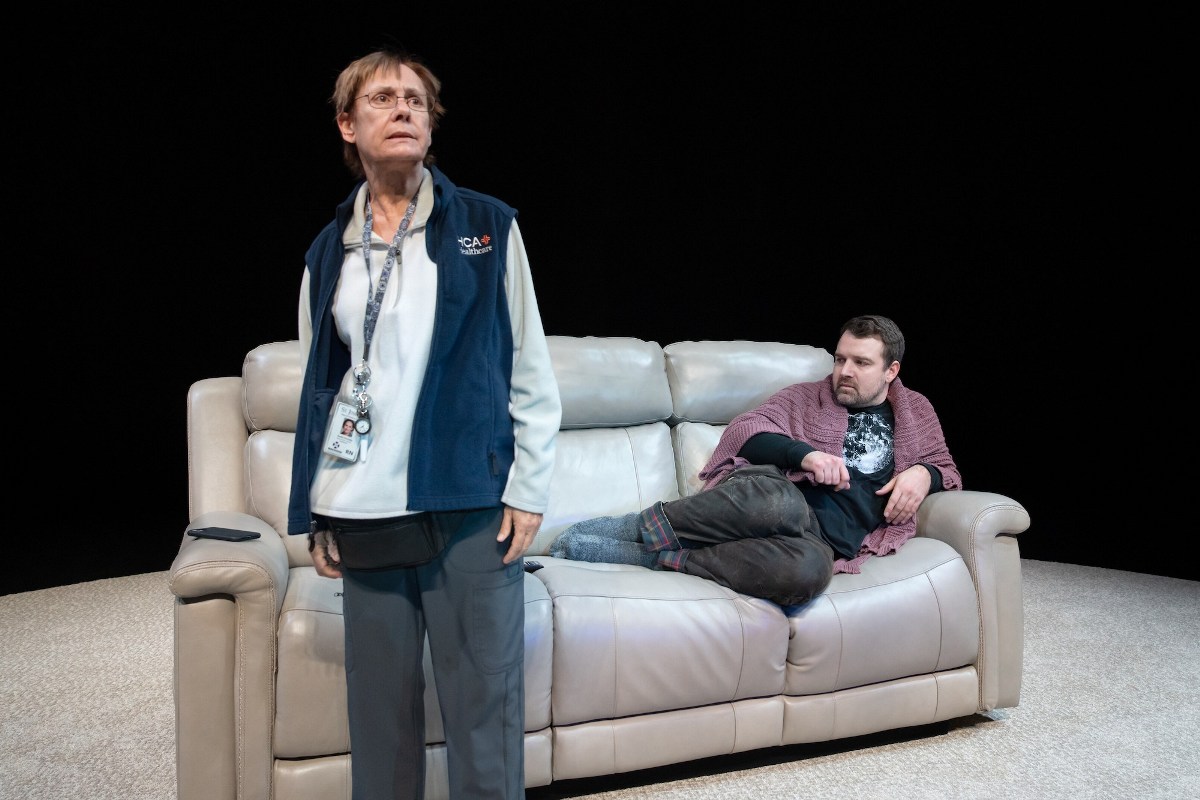
He has resisted the idea that Broadway stories must be loud or flashy to matter, and the disheartening cultural amnesia that sometimes greets small, human-scaled work on large stages.
NYI: When you began working on Little Bear Ridge Road, were there specific moments, people, or landscapes that influenced the emotional world of the play?
Hunter: My dad lived in a house on Little Bear Ridge Road in Ohio. I wrote the first 30- to 40-pages of that play in that house. It was very direct. There’s a scene in the play where they’re stargazing. At my dad’s house, you really can see the galaxy from that ridge. You get such an acute sense of how little you are in the scope of everything. I actually started the play wanting to write about watching television. I think there was something about the smallness of it that contrasted with the vastness of that landscape. That is what gave birth to [Little Bear Ridge Road].
NYI: What was the impetus for wanting to write a show about watching television?
Hunter: With the last few plays I’ve written, I’ve gotten interested in how I can make something that is fundamentally untheatrical, theatrical. With A Case for the Existence of God it was two guys in a cubicle talking about a small loan. With Grangeville it was two brothers who are communicating over the phone and Zoom about the death of their parents.
I continue to be really interested in counterintuitive ways to write for the theatre. I want to eschew the idea that plays need to be big, loud, and flashy, and really just focus in. I ask, “How can you say the most with the least possible?”
NYI: With the premature closing of Little Bear Ridge Road, do you think audience expectations have shifted in ways that make it harder for certain kinds of stories to find their footing?
Hunter: What’s disheartening is that we used to do plays like this on Broadway all the time. It wasn’t uncommon to have stories like this occupy Broadway stages and find audiences. Some of the truly disheartening reactions I’ve seen to the closing notice (and they’re few and far between) are the people who are like, “Well what did they expect? It’s just a small play. It’s just a couch [on a stage].”
It’s so gutting to read those reactions. My God, your memory is so short! We used to do [the sparse] Talley’s Folly on Broadway; it was normal to do a new Lanford Wilson play on Broadway. This idea that to do a play in a large house it needs some artificial largesse, it is just so cynical and shortsighted. It’s sad to me.
NYI: Little Bear received incredible reviews and positive buzz. Despite the difficulties in the current climate, what continues to give you hope about the future of Broadway and theatre as a whole?
Hunter: What gives me hope is that when I look at social media and I see AI, largely the reaction is people being like, “I hate this.” What that tells me is that people are craving something real and experiencing things in person. I think that’s going to continue. People are growing increasingly tired of their screens. That bodes well for live performance going forward.
NYI: One of the many reasons your writing is so poignant is that you write about real people; this makes it so easy for people to connect with the characters. How does this play connect to your larger body of work, particularly your interest in place and memory?
Hunter: It doesn’t feel like I wrote a different play knowing I was writing for Laurie Metcalf and something that I knew could possibly have a larger life than a play that I was doing at a 99-seat black box. I feel like I didn’t have to compromise anything in order to write this play. It does feel like the ideas of the play are slightly larger.
The older I get, the farther that I get away from the fact that I went to a Christian high school. Religion has occupied a lot of my plays, but this play is decidedly irreligious. Maybe there’s a kind of maturity to this play that feels distinct from my other plays. I’m also just getting older. I think there’s a sense of continuance. I have a daughter now and history is long. There’s a sense in the play that there’s a tininess of these characters in this vast landscape that’s really acute.
NYI: Micah Stock’s character, Ethan, is going through a similar stage in which he’s confronting aging.
Hunter: When you’re young it’s hard to know what getting old feels like. I think Ethan is starting to understand what it is to get older. There was a line that we cut toward the end of the play, where he says, “I just have to keep going, and I have to do this for what? Forty or fifty more years?” He has a sense that he’s not even half over with his life and it’s already feeling so bleak.
NYI: What questions did you hope audiences would sit with after leaving the theatre?
Hunter: As with a lot of the plays that I’ve written, there was a sense of hope at the end of it, but it’s a very hard-won sense of hope. I don’t know if there is a specific question, but I hope they leave with a sense that they occupy such an infinitesimal amount of time in the grand scheme of the universe; however, there is a continuance in that infinitesimal existence. There is forward movement, and there is hope, and there is meaning, as small as it may be.
NYI: What did writing Little Bear teach you about yourself as an artist?
Hunter: I wrote this play right as the pandemic was ending. It was the first play that I had written in two years. I’ve written one or two plays each year since I was seventeen years old-the pandemic was the first time that I just stopped. I didn’t know why I was even writing, and it just felt like it was all gone.
At that point, writing a play felt like a theoretical exercise. When Joe [Mantello, director] and Laurie [Metcalf] came and asked if I would write the play, I was very nervous because I hadn’t written in two years. I wondered if it was a muscle that had atrophied at that point. In the sense that the play has a sense of hard-won hope and continuance, the physical act of writing this play was also an act of hard-won hope and continuance for me. I think it restarted something for me.
I find theatre to be so collaborative and community-based. Even though I wrote a play that seems very singular and introspective, I’m always working with a goal of community-building. When the community was obliterated, it just felt like a hollow exercise.
NYI: What advice would you give emerging playwrights who want to write intimate, character-driven work, which is what you always do so incredibly well?
Hunter: I think you have to be kind of relentless. Don’t let anything stop you. There’s always a reason to put pen to paper. Don’t compromise what you want to do and keep doing it the way you want to do it. I have had about twenty plays produced, and I’ve written way more than that that are lying dormant on my hard drive. I think if early on I had written a few plays and I had found success, I would have let that get to me and quit.
I wouldn’t be where I am today. I never stopped writing, and I never fell out of love with the physical aspect of writing a play. It’s so important for you to be in love with writing a play, and not just be in love with the idea of having written a play. If you’re only in love with the idea of having written a play, you’re not going to keep doing it.
NYI: Are there questions you’re still wrestling with that may appear in future plays?
Hunter: I think the thing that keeps me writing is that when I was a teenager and within this fundamentalist Christian community, meaning was very accessible. Making sense of the universe was right in front of you – any question you had could be answered by turning to the Bible, or asking the pastor. Once I left that community, I had to search for answers on my own. I think that’s the continual project of the plays. Absent of that very strict and rigorous belief system, how do we make meaning out of meaninglessness?
NYI: Tell us something that people would be surprised to learn about you.
Hunter: Even though my plays are based in realism and accessible in that way, often my favorite artists are weird. I love experimental plays and movies. I love weird stuff. I don’t think that the stuff that I write is all that weird. Some of my favorite art is completely bonkers. When I was in college my favorite theatre was seeing Richard Forman plays. When I was a teenager, I would just go to the cult classic section at the local VHS rental store and watch the weird things I could find. I’m watching this show called The Chair Company on HBO and it’s so strange. I’m just in love with it. The set up is completely bonkers. Check it out.

Iris Wiener is an entertainment writer, editor, reporter and theatre critic based in New York. Her portfolio contains a diverse collection of work on all genres of entertainment. Her reporting has been featured in more than twenty publications, including Newsday, Playbill, TheaterMania, Encore Monthly, Weston Magazines, and Long Island Woman. She is a proud voting member of the Drama Desk and The Outer Critics Circle.